Refine listing
Actions for selected content:
153969 results in Open Access
PREP-aring is worth it: Success of the Case Western Reserve University post-baccalaureate research education program and its scholars
-
- Journal:
- Journal of Clinical and Translational Science / Volume 10 / Issue 1 / 2026
- Published online by Cambridge University Press:
- 29 May 2026, e113
-
- Article
-
- You have access
- Open access
- HTML
- Export citation

On the influence of free stream turbulence on roughness-induced boundary-layer transition
-
- Journal:
- Journal of Fluid Mechanics / Volume 1036 / 10 June 2026
- Published online by Cambridge University Press:
- 29 May 2026, A19
-
- Article
-
- You have access
- Open access
- HTML
- Export citation
-
This study experimentally examines how free stream turbulence (FST) alters roughness-induced transition by exposing cylindrical roughness elements of diameter-to-height ratios $\eta =1,2,3$ to three FST levels ( $ \textit{Tu}\approx 0.05\,\%$, $1.15\,\%$, $1.55\,\%$). Although the roughness Reynolds number $ \textit{Re}_{\textit{kk}}$ is varied solely through the free stream velocity, a detailed characterisation of the incoming FST and resulting Klebanoff modes shows that their variation remains moderate, enabling a controlled assessment of FST effects. The FST consistently promotes earlier transition for all $\eta$ at subcritical global-instability Reynolds numbers, but its influence on the underlying instability mechanisms depends strongly on $\eta$. For the ‘thick’ cylinders ( $\eta =2,3$), the global instability remains remarkably robust: the dominant varicose mode and its frequency scaling show virtually no sensitivity to FST. In contrast, the ‘thin’ cylinder ( $\eta =1$) exhibits an extreme susceptibility: already moderate FST suppresses the sinuous mode predicted by global stability theory at supercritical Reynolds numbers. These findings provide a clear, experimentally grounded explanation for why global stability predictions often fail to materialise the structures in real, turbulence-contaminated environments and establish FST as a decisive factor governing whether, when and how roughness-induced instabilities manifest.


The Limits of Behavioral Law and Economics’ Predictive Power
-
- Journal:
- German Law Journal / Volume 27 / Issue 3 / April 2026
- Published online by Cambridge University Press:
- 29 May 2026, pp. 348-383
-
- Article
-
- You have access
- Open access
- HTML
- Export citation

Uncovering bistability phenomena in two-layer Couette flow experiments using non-local evolution equations
-
- Journal:
- Journal of Fluid Mechanics / Volume 1036 / 10 June 2026
- Published online by Cambridge University Press:
- 29 May 2026, A9
-
- Article
-
- You have access
- Open access
- HTML
- Export citation
La bala mágica: El arsénico en la cultura finisecular latinoamericana
-
- Journal:
- Latin American Research Review ,
- Published online by Cambridge University Press:
- 29 May 2026, pp. 1-17
-
- Article
-
- You have access
- Open access
- HTML
- Export citation
Pathways to Inclusive Digital Archaeological Archives
-
- Journal:
- Advances in Archaeological Practice , First View
- Published online by Cambridge University Press:
- 29 May 2026, pp. 1-20
-
- Article
-
- You have access
- Open access
- HTML
- Export citation
Prediction of α-synuclein seed amplification assay positivity in remotely followed LRRK2 G2019S carriers using a validated data-driven model
-
- Journal:
- Journal of Clinical and Translational Science / Volume 10 / Issue 1 / 2026
- Published online by Cambridge University Press:
- 29 May 2026, e101
-
- Article
-
- You have access
- Open access
- HTML
- Export citation
Mapping the landscape of dissemination and implementation science across the CTSA consortium: A multi-domain environmental website scan
-
- Journal:
- Journal of Clinical and Translational Science / Volume 10 / Issue 1 / 2026
- Published online by Cambridge University Press:
- 29 May 2026, e97
-
- Article
-
- You have access
- Open access
- HTML
- Export citation
The colonial origins of secularization: historical pathways of economic elites and religiosity in the Middle East and North Africa
-
- Journal:
- Politics and Religion / Volume 19 / Issue 2 / June 2026
- Published online by Cambridge University Press:
- 29 May 2026, pp. 325-347
-
- Article
-
- You have access
- Open access
- HTML
- Export citation
Phonetic prominence and lexical stress in Munster Irish, 1928 and 2020–21
-
- Journal:
- Journal of the International Phonetic Association , First View
- Published online by Cambridge University Press:
- 29 May 2026, pp. 1-30
-
- Article
-
- You have access
- Open access
- HTML
- Export citation
Business Groups, Business Interest Associations and Co-operatives: Peak National Co-operative Associations in Australia 1920–2023
-
- Journal:
- Enterprise & Society , First View
- Published online by Cambridge University Press:
- 29 May 2026, pp. 1-28
-
- Article
-
- You have access
- Open access
- HTML
- Export citation
Navigating the trade-offs: conformity, organ sparing and secondary cancer risk in IMRT vs VMAT breast cancer radiotherapy using halcyon
- Part of
-
- Journal:
- Journal of Radiotherapy in Practice / Volume 25 / 2026
- Published online by Cambridge University Press:
- 29 May 2026, e12
-
- Article
-
- You have access
- Open access
- HTML
- Export citation
A methodology for the study of an informal environmental economy
-
- Journal:
- International Journal of Law in Context , First View
- Published online by Cambridge University Press:
- 29 May 2026, pp. 1-17
-
- Article
-
- You have access
- Open access
- HTML
- Export citation

Reynolds number invariance in the coherent structures of wall-bounded turbulence
-
- Journal:
- Journal of Fluid Mechanics / Volume 1036 / 10 June 2026
- Published online by Cambridge University Press:
- 29 May 2026, A17
-
- Article
-
- You have access
- Open access
- HTML
- Export citation
-
Estimation of instantaneous and statistical properties of wall-bounded turbulence across different Reynolds numbers has significant applications in scientific research and engineering, where the key challenge is to identify the Reynolds number invariance underlying the varying flow properties as Reynolds number changes. In this study, we develop a refined inner–outer interaction model (IOIM) that isolates the footprints of large-scale structures populating within a prescribed wall-normal range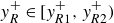 $y_{R}^+ \in [ y_{R1}^+ , y_{R2}^+ )$. When the reference layers are located within $ 80 \leqslant y_{R1}^+ \lt y_{R2}^+ \leqslant 0.3\textit{Re}_\tau$, the energy spectral densities of the isolated large-scale structures, including the wall-attached and wall-detached eddies, are found to be independent of Reynolds numbers with direct numerical simulations spanning $ \textit{Re}_\tau \sim O(10^2)$– $O(10^3)$. The spectral energy densities of the near-wall small-scale motions also show little Reynolds number dependence. The increase in near-wall turbulent kinetic energy with Reynolds number is explained from the identified Reynolds number invariance of coherent structures. Meanwhile, certain amplitude and scale modulation effects caused by large-scale structures are found to make the distribution patterns of fluctuation amplitudes and scales of near-wall structures more susceptible to Reynolds number influence. The findings of this study provide insights for the developments of predictive models for wall-bounded turbulence across different Reynolds numbers.


Investigating the Relationship Between Anxiety-Stress Levels, Quality of Life, and Occupational Balance in Rescue Workers
-
- Journal:
- Disaster Medicine and Public Health Preparedness / Volume 20 / 2026
- Published online by Cambridge University Press:
- 29 May 2026, e107
-
- Article
-
- You have access
- Open access
- HTML
- Export citation

Interactions between internal solitary waves and porous surface canopies
-
- Journal:
- Journal of Fluid Mechanics / Volume 1036 / 10 June 2026
- Published online by Cambridge University Press:
- 29 May 2026, A14
-
- Article
-
- You have access
- Open access
- HTML
- Export citation
Kinship Networks and Their Visual Traces in the Estado da India: Connected by Saint Ursula and Her Companions in the Manueline World
-
- Journal:
- Itinerario , First View
- Published online by Cambridge University Press:
- 29 May 2026, pp. 1-17
-
- Article
-
- You have access
- Open access
- HTML
- Export citation
Epistemic Fragments: Stories of Ruins and Heritage at Actuncan, Belize
-
- Journal:
- Latin American Antiquity , First View
- Published online by Cambridge University Press:
- 29 May 2026, pp. 1-16
-
- Article
-
- You have access
- Open access
- HTML
- Export citation
The stars down to the ballot box: Heterodoxy and comparative electoral behaviour
-
- Journal:
- European Journal of Political Research ,
- Published online by Cambridge University Press:
- 29 May 2026, pp. 1-20
-
- Article
-
- You have access
- Open access
- HTML
- Export citation

Flow structure in fully developed open-channel flow over a mussel bed
-
- Journal:
- Journal of Fluid Mechanics / Volume 1036 / 10 June 2026
- Published online by Cambridge University Press:
- 29 May 2026, A8
-
- Article
-
- You have access
- Open access
- HTML
- Export citation
-
Eddy-resolving numerical simulations are used to investigate the fully developed open-channel flow over an array of large-scale bed roughness elements placed on a rough or on a smooth surface that mimics freshwater mussels partially buried in a gravel or in a sand bed, respectively. The rough surface corresponds to the scanned surface of a gravel bed with uniformly distributed bed roughness. In this paper we analyse how the surface mussel coverage density, BC, the roughness of the bed surface on which the mussels are placed and the filtering activity of the mussels (i.e. the local mass exchange occurring through the mussels’ syphons) affect the double-averaged profiles of the streamwise velocity, turbulent kinetic energy, Reynolds and dispersive shear stresses, and the equivalent bed roughness height, $ K_{S} $. Results show that similar to rough-bed boundary layers forming over sparse roughness elements in a deep environment (uniform free-stream velocity) and to those developing in a depth-limited environment (e.g. open channel), a multilayer analytical model can be used to approximate the double-averaged profile of the streamwise velocity over the flow depth, D, in the case of fully developed flow over a mussel bed. For similar values of BC and height of the protruding mussels, h, the scaling coefficient of the law-of-the-wake component supplementing the law-of-the-wall inside the inertial layer ( $h \lt z \lt D$) is found to be lower than values estimated for developing boundary layers over mussel beds. Results show that the equivalent roughness height increases monotonically with the surface mussel coverage density until BC ≈ 0.8, when the average distance between the mussels becomes sufficiently low for a skimming flow regime to develop over the top of the mussels. Bed roughness effects on the double-averaged variables are significant only for cases with $ \textit{BC} \lt 0.3$. Results also show that mussel-induced velocity streaks are generated over the top of the mussels and the average transverse spacing of the streaks, λ, decays with increasing BC for constant h. The variation of $ \lambda / K_{S} $ with the non-dimensional distance from the bed surface is similar to that observed for fully developed flow over a rough bed with distributed roughness except for very low surface mussel coverage densities (i.e. $ \textit{BC} \lt 0.02 $ ) when λ remains constant (i.e. $ \lambda / K_{S} $ ≈ 10).


