Refine listing
Actions for selected content:
338 results in 05-XX
Strict log-concavity of k-coloured partitions
- Part of
-
- Journal:
- Proceedings of the Royal Society of Edinburgh. Section A: Mathematics , First View
- Published online by Cambridge University Press:
- 18 May 2026, pp. 1-15
-
- Article
-
- You have access
- Open access
- HTML
- Export citation
-
In recent years, there has been extensive work on inequalities among partition functions. In particular, Nicolas, and independently DeSalvo–Pak, proved that the partition function $p(n)$ is eventually log-concave. Inspired by this and other results, Chern–Fu–Tang first conjectured the log-concavity of $k$-coloured partitions. Three of the authors and Tripp later proved this conjecture by introducing recursive sequences and a strict inequality for fractional partition functions, giving explicit errors. In this paper, we show that the log-concavity is, in fact, strict for $k\geq 2$. We shed further light on this phenomenon by utilizing Hardy–Littlewood–Pólya’s notion of majorizing. We prove that for partitions $\boldsymbol{a},\boldsymbol{b}$ of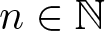 $n\in{\mathbb N}$, if $\boldsymbol b$ majorizes $\boldsymbol a$, then $p_k(\boldsymbol{a}) \gt p_k(\boldsymbol{b})$. Numerical calculations indicate that our result is sharp.


The slice decomposition of planar hypermaps
- Part of
-
- Journal:
- Forum of Mathematics, Sigma / Volume 14 / 2026
- Published online by Cambridge University Press:
- 28 April 2026, e68
-
- Article
-
- You have access
- Open access
- HTML
- Export citation
On the proportion of derangements in affine classical groups
- Part of
-
- Journal:
- Forum of Mathematics, Sigma / Volume 14 / 2026
- Published online by Cambridge University Press:
- 24 April 2026, e64
-
- Article
-
- You have access
- Open access
- HTML
- Export citation
-
We derive exact formulas for the proportions of derangements and of derangements of p-power order in the affine classical groups $\operatorname {\mathrm {AU}}_m(q)$, $\operatorname {\mathrm {ASp}}_{2m}(q)$, $\operatorname {\mathrm {AO}}_{2m+1}(q)$ and $\operatorname {\mathrm {AO}}^{\pm }_{2m}(q)$, where p denotes the characteristic of the defining finite field.
In the unitary case, the proofs of the formulas rely on a result on partitions of independent interest: we obtain a generating function for integer partitions $\lambda =(\lambda _1, \dots , \lambda _m)$ into m parts, with $\lambda _1\ge \dots \ge \lambda _m$, such that either $\lambda _1=1$ or $\lambda _{k-1}>\lambda _k=k$ for some $k \in \{2, \dots ,m\}$.
In the symplectic and orthogonal cases, the proofs of the formulas reduce to verifying three q-polynomial identities conjectured by the author and later proved by Fulman and Stanton.


Perfect partitions of a random set of integers
- Part of
-
- Journal:
- Journal of Applied Probability , First View
- Published online by Cambridge University Press:
- 06 April 2026, pp. 1-30
-
- Article
-
- You have access
- Open access
- HTML
- Export citation
-
Let $X_1,\ldots, X_n$ be independent integers distributed uniformly on [M], $M\ge 2$. A partition S of [n] into $\nu$ non-empty subsets $S_1,\ldots, S_{\nu}$ is called perfect if all $\nu$ values $\sum_{j\in S_{\alpha}}X_j$ are equal. For a perfect partition to exist, $\sum_j X_j$ has to be divisible by $\nu$. In 2001, for $\nu=2$, Christian Borgs, Jennifer Chayes, and the author proved that, conditioned on $\sum_j X_j$ being even, with high probability a perfect partition exists if $\kappa\;:\!=\; \lim {{n}/{\log M}}>{{1}/{\log 2}}$, and that with high probability no perfect partition exists if $\kappa<{{1}/{\log 2}}$. Responding to a question by George Varghese, we prove that for $\nu\ge 3$ with high probability no perfect partition exists if $\kappa<{{2}/{\log \nu}}$, which is twice as large as the naive threshold $1/\log 3$ for $\nu=3$. We identify the range of $\kappa$ where the expected number of perfect partitions is exponentially high. We show that for $\kappa> {{2(\nu-1)}/{\log[(1-2\nu^{-2})^{-1}]}}$ the total number of perfect partitions is exponentially high with probability $\gtrsim (1+\nu^2)^{-1}$, i.e. below $1/\nu$, the limiting probability that $\sum_j X_j$ is divisible by $\nu$.


Subspace profiles over finite fields and q-Whittaker expansions of symmetric functions
- Part of
-
- Journal:
- Forum of Mathematics, Sigma / Volume 14 / 2026
- Published online by Cambridge University Press:
- 01 April 2026, e48
-
- Article
-
- You have access
- Open access
- HTML
- Export citation
Record-biased permutations and their permuton limit
- Part of
-
- Journal:
- Combinatorics, Probability and Computing / Volume 35 / Issue 3 / May 2026
- Published online by Cambridge University Press:
- 27 March 2026, pp. 375-413
-
- Article
- Export citation
Rough permutations with a fixed set of a given size
- Part of
-
- Journal:
- Combinatorics, Probability and Computing , First View
- Published online by Cambridge University Press:
- 27 March 2026, pp. 1-18
-
- Article
-
- You have access
- Open access
- HTML
- Export citation
-
Let $r, k, n$ be integers satisfying $1\leqslant r\leqslant k\leqslant n/2$. Let ${{\mathcal{R}}}_r(n, k)$ denote the proportion of permutations $\pi \in {{\mathcal{S}}}_n$ that fix a set of size $k$ and have no cycle of length less than $r$. In this note, we determine the order of magnitude of ${{\mathcal{R}}}_r(n, k)$ uniformly for all $2\leqslant r\leqslant k\leqslant n/2$. This result generalises the corresponding estimate of Eberhard, Ford, and Green for the case $r=1$.


Hyperbinary partitions and q-deformed rationals
- Part of
-
- Journal:
- Forum of Mathematics, Sigma / Volume 14 / 2026
- Published online by Cambridge University Press:
- 26 February 2026, e30
-
- Article
-
- You have access
- Open access
- HTML
- Export citation
-
A hyperbinary partition of the nonnegative integer n is a partition where every part is a power of $2$ and every power of $2$ appears at most twice. We give three applications of the length generating function for such partitions, denoted by $h_q(n)$. Morier-Genoud and Ovsienko defined the q-analogue of a rational number $[r/s]_q$ in various ways, most of which depend directly or indirectly on the continued fraction expansion of $r/s$. As our first application we show that $[r/s]_q=q\,h_q(n-1)/h_q(n)$ where $r/s$ occurs as the nth entry in the Calkin-Wilf enumeration of the non-negative rationals. Next we consider fence posets which are those which can be obtained from a sequence of chains by alternately pasting together maxima and minima. For every n we show there is a fence poset ${\cal F}(n)$ whose lattice of order ideals is isomorphic to the poset of hyperbinary partitions of n ordered by refinement. For our last application, Morier-Genoud and Ovsienko also showed that $[r/s]_q$ can be computed by taking products of certain matrices which are q-analogues of the standard generators for the special linear group $\operatorname {\mathrm {SL}}(2,{\mathbb Z})$. We express the entries of these products in terms of the polynomials $h_q(n)$.


GALOIS GROUPS OF APÉRY-LIKE SERIES MODULO PRIMES
- Part of
-
- Journal:
- Bulletin of the Australian Mathematical Society , First View
- Published online by Cambridge University Press:
- 13 February 2026, pp. 1-14
-
- Article
-
- You have access
- Open access
- HTML
- Export citation
Graphical sequences and plane trees
- Part of
-
- Journal:
- Combinatorics, Probability and Computing / Volume 35 / Issue 3 / May 2026
- Published online by Cambridge University Press:
- 05 February 2026, pp. 316-328
-
- Article
-
- You have access
- Open access
- HTML
- Export citation
-
Balister, the second author, Groenland, Johnston, and Scott recently showed that there are asymptotically $C4^n/n^{3/4}$ many unordered sequences that occur as degree sequences of graphs with $n$ vertices. Combining limit theory for infinitely divisible distributions with a new connection between a class of random walk trajectories and a subset counting formula from additive number theory, we describe $C$ in terms of Walkup’s number of rooted plane trees. The bijection is related to an instance of the Lévy–Khintchine formula. Our main result complements a result of Stanley, that ordered graphical sequences are related to quasi-forests.


Lorentzian polynomials on cones
- Part of
-
- Journal:
- Forum of Mathematics, Sigma / Volume 14 / 2026
- Published online by Cambridge University Press:
- 26 January 2026, e16
-
- Article
-
- You have access
- Open access
- HTML
- Export citation
COMBINATORIAL PROOFS OF CERTAIN RESULTS OF CHEN AND ZOU ON TWO-COLOUR PARTITIONS
- Part of
-
- Journal:
- Bulletin of the Australian Mathematical Society , First View
- Published online by Cambridge University Press:
- 12 January 2026, pp. 1-7
-
- Article
- Export citation
Enriched cycle structures and roots of permutations
- Part of
-
- Journal:
- Proceedings of the Edinburgh Mathematical Society , First View
- Published online by Cambridge University Press:
- 08 January 2026, pp. 1-18
-
- Article
- Export citation
-
This paper is concerned with a duality between $r$-regular permutations and $r$-cycle permutations, and a monotone property due to Bóna-McLennan-White on the probability $p_r(n)$ for a random permutation of $\{1,2,\ldots, n\}$ to have an $r$th root, where $r$ is a prime. For $r=2$, the duality relates permutations with odd cycles to permutations with even cycles. For the general case where $r\geq 2$, we define an $r$-enriched permutation as a permutation with $r$-singular cycles coloured by one of the colours $1, 2, \ldots, r-1 $. In this setup, we discover a bijection between $r$-regular permutations and enriched $r$-cycle permutations, which in turn yields a stronger version of an inequality of Bóna-McLennan-White. This leads to a fully combinatorial understanding of the monotone property, thereby answering their question. When $r$ is a prime power $q^l$, we further show that $p_r(n)$ is monotone. In the case that $n+1 \not\equiv 0 \pmod q$, the equality $p_r(n)=p_r(n+1)$ has been established by Chernoff.


Overpartitions with parts separated by parity
- Part of
-
- Journal:
- Canadian Mathematical Bulletin , First View
- Published online by Cambridge University Press:
- 05 January 2026, pp. 1-11
-
- Article
-
- You have access
- Open access
- HTML
- Export citation
-
In this article, we generalize Andrews’ partitions separated by parity to overpartitions in two ways. We investigate the generating functions for $16$ overpartition families whose parts are separated by parity, and we prove various q-series identities for these functions. These identities include relations to modular forms, q-hypergeometric series, and mock modular forms.

The finite forms of MacMahon’s q-series
- Part of
-
- Journal:
- Proceedings of the Edinburgh Mathematical Society , First View
- Published online by Cambridge University Press:
- 02 January 2026, pp. 1-28
-
- Article
- Export citation
-
In his seminal work on partitions and divisor functions, MacMahon introduced the following two q-series:
 \begin{align*}A_k(q):= \sum_{0 \lt s_1 \lt s_2 \lt \cdots \lt s_k} \frac{q^{s_1+s_2+\cdots+s_k}}{(1-q^{s_1})^2(1-q^{s_2})^2\cdots(1-q^{s_k})^2},\qquad\quad\quad\quad\\[6pt]C_k(q):= \sum_{0 \lt s_1 \lt s_2 \lt \cdots \lt s_k}\frac{q^{2(s_1+s_2+\cdots+s_k)-k}}{(1-q^{2s_1-1})^2(1-q^{2s_2-1})^2\cdots(1-q^{2s_k-1})^2}.\end{align*}
In 2013, Andrews and Rose proved that $A_k(q)$ and $C_k(q)$ are quasimodular forms of weight $\leq 2k$. Recently, Ono and Singh proved two interesting identities involving $A_k(q)$ and $C_k(q)$ and showed that the generating functions for the three-coloured partition function $p_3(n)$ and the overpartition function $\overline{p}(n)$ have infinitely many closed formulas in terms of MacMahon’s quasimodular forms $A_k(q)$ and $C_k(q)$. In this paper, we introduce the finite forms $A_{k,n}(q)$ and $C_{k,n}(q)$ of MacMahon’s q-series $A_k(q)$ and $C_k(q)$ and prove two identities which generalize Ono–Singh’s identities. We also prove some new identities involving $A_{k,n}(q)$, $C_{k,n}(q)$ and certain infinite products based on two Bailey pairs. Those identities are analogous to Ono–Singh’s identities.


Toric arc schemes and q-enumeration of lattice points
- Part of
-
- Journal:
- Proceedings of the Edinburgh Mathematical Society , First View
- Published online by Cambridge University Press:
- 18 December 2025, pp. 1-23
-
- Article
-
- You have access
- Open access
- HTML
- Export citation
-
We introduce a natural weighted enumeration of lattice points in a polytope, and give a Brion-type formula for the corresponding generating function. The weighting has combinatorial significance, and its generating function may be viewed as a generalization of the Rogers–Szegő polynomials. It also arises from the geometry of the toric arc scheme associated to the normal fan of the polytope. We show that the asymptotic behaviour of thecoefficients at $q=1$ is Gaussian.

Free fermionic probability theory and k-theoretic schubert calculus
- Part of
-
- Journal:
- Forum of Mathematics, Sigma / Volume 13 / 2025
- Published online by Cambridge University Press:
- 09 December 2025, e197
-
- Article
-
- You have access
- Open access
- HTML
- Export citation
Explicit formulas for the Grothendieck class of $\overline {\mathcal{M}}_{0,n}$
- Part of
-
- Article
-
- You have access
- Open access
- HTML
- Export citation
-
We obtain explicit expressions for the class in the Grothendieck group of varieties of the moduli space $\overline {\mathcal{M}}_{0,n}$. This information is equivalent to the Poincaré polynomial and yields explicit expressions for the Betti numbers of $\overline {\mathcal{M}}_{0,n}$ in terms of Stirling or Bernoulli numbers. The expressions are obtained by solving a differential equation characterizing the generating function for the Poincaré polynomials, determined by Manin in the 1990s and equivalent to Keel’s recursion for the Betti numbers of $\overline {\mathcal{M}}_{0,n}$. Our proof reduces the solution to two combinatorial identities, verified by applying Lagrange series. We also study generating functions for the individual Betti numbers. These functions are determined by a set of polynomials $p^{(k)}_m(z)$, $k\geqslant m$. These polynomials are conjecturally log-concave; we verify this conjecture for several infinite families, corresponding to generating functions for $2k$-Betti numbers of $\overline {\mathcal{M}}_{0,n}$ for all $k\leqslant 100$. Further, studying the polynomials $p^{(k)}_m(z)$, we prove that the generating function for the Grothendieck class can be written in terms of a series of rational functions in the principal branch of the Lambert W-function. We include an interpretation of the main result in terms of Stirling matrices and a discussion of the Euler characteristic of $\overline {\mathcal{M}}_{0,n}$.


Inequalities for the sequences with unified form
- Part of
-
- Journal:
- Canadian Journal of Mathematics , First View
- Published online by Cambridge University Press:
- 20 November 2025, pp. 1-20
-
- Article
- Export citation
-
We consider a class of sequence $c(n)$ with the following asymptotic form: We give criteria for the Turán inequality of any order, the double Turán inequality, and the Laguerre inequality of any order of
 $$ \begin{align*}c(n) \sim \frac C{n^\kappa} \exp\left(\sum_{\lambda\in\mathcal S}A_\lambda n^\lambda \right) \sum_{\mu\in\mathcal T} \frac{\beta_\mu}{n^\mu} \qquad (n \to \infty).\end{align*} $$ $c(n)$ for sufficiently large n. We also give the companion inequalities for the Turán inequality and the Laguerre inequality of any order for $c(n)$. As applications, we will show that the numbers of commuting $\ell $-tuples in $S_n$, the partition without sequence, the plane partition, the partition into k-gonal numbers, the finite-dimensional representations of groups $\mathfrak {su}(3)$ and $\mathfrak {so}(5),$ and the coefficients of infinite product generating functions asymptotically satisfy these inequalities. Some of them settle open problems proposed by Bringmann, Franke, and Heim.


Self-avoiding walk is ballistic on graphs with more than one end
- Part of
-
- Journal:
- Forum of Mathematics, Sigma / Volume 13 / 2025
- Published online by Cambridge University Press:
- 28 October 2025, e179
-
- Article
-
- You have access
- Open access
- HTML
- Export citation
-
We prove that on any transitive graph G with infinitely many ends, a self-avoiding walk of length n is ballistic with extremely high probability, in the sense that there exist constants $c,t>0$ such that $\mathbb {P}_n(d_G(w_0,w_n)\geq cn)\geq 1-e^{-tn}$ for every $n\geq 1$. Furthermore, we show that the number of self-avoiding walks of length n grows asymptotically like $\mu _w^n$, in the sense that there exists $C>0$ such that $\mu _w^n\leq c_n\leq C\mu _w^n$ for every $n\geq 1$. These results generalise earlier work by Li (J. Comb. Theory Ser. A, 2020). The key to this greater generality is that in contrast to Li’s approach, our proof does not require the existence of a special structure that enables the construction of separating patterns. Our results also extend more generally to quasi-transitive graphs with infinitely many ends, satisfying the additional technical property that there is a quasi-transitive group of automorphisms of G which does not fix an end of G.


