To save content items to your account,
please confirm that you agree to abide by our usage policies.
If this is the first time you use this feature, you will be asked to authorise Cambridge Core to connect with your account.
Find out more about saving content to .
To save content items to your Kindle, first ensure no-reply@cambridge.org
is added to your Approved Personal Document E-mail List under your Personal Document Settings
on the Manage Your Content and Devices page of your Amazon account. Then enter the ‘name’ part
of your Kindle email address below.
Find out more about saving to your Kindle.
Note you can select to save to either the @free.kindle.com or @kindle.com variations.
‘@free.kindle.com’ emails are free but can only be saved to your device when it is connected to wi-fi.
‘@kindle.com’ emails can be delivered even when you are not connected to wi-fi, but note that service fees apply.
The artificial language of Esperanto would achieve remarkable success in early twentieth-century Europe. Its popularity there is not surprising: though designed as a universal language, Esperanto was essentially European in its grammar and lexicon. But this Europeanness – or, more precisely, this near-Europeanness – also spoke to communities living further afield. In India before the First World War, groups regarded as Europeanized by most Indians but as Indian by most Europeans found Esperanto a literal language with which to articulate their social location. As an ‘Esperantist’, there was no contradiction between being Indian and participating in European society, and to claim the label offered a shorthand that others (whatever their relationship to the movement) could readily grasp. This article considers these dynamics against the backdrop of a visit to India by the Irish Esperantist John Pollen, an event that sheds light on both the inner workings of the Indian movement and the importance that non-Indian Esperantists assigned to it. The popularity of Esperanto would eventually decline in India with the First World War, but until it did, the movement – indexical of Europe yet resonant in India – would promise a transnational community to which many in India felt they could aspire and belong.
This article introduces a dome-type soft tactile sensor that can autonomously adjust its stiffness to evaluate surface contact characteristics, including the elastic modulus, contact force, and the presence of abnormal hardness within soft materials, using a strain gauge as a single sensing element. The strain sensor element is placed at the tip of the dome to measure the deformations during contact that reflect the properties of the contacted object. Using machine learning techniques, the sensor system can accurately predict these characteristics in various materials with an error rate of less than approximately 8%. A hybrid approach that combines experimental and simulation data enables the sensor to be trained effectively, generating sufficient data for accurate predictions without extensive experiments. The high accuracy results of the machine learning models demonstrate that the sensor system can precisely calculate the elastic modulus and depth of the defect. The adaptability and precision of the proposed sensor make it ideal for applications in medical diagnostics and other fields requiring careful interaction with soft materials. Furthermore, its innovative approach can be referenced for exploiting the properties of soft materials to achieve task-specific morphology without redesigning soft sensors or soft robots.
Competition lies at the heart of our economic, social, and political lives. Studies show that competitions motivate higher performance, but they can also have a dark side, by which competitors engage in deceptive, dishonest, and sabotaging conduct. In the paper’s primary study, we compare competitive behavior at 4 levels of competition intensity. As expected, we find that intensifying the competition has a general effect of increasing both the effort invested in the task and the tendency to sabotage the counterpart. We were particularly interested in whether participants would engage in sabotaging behavior at the lower boundary of competitive intensity that was devoid of any incentive to outperform the counterpart and also precluded any prospect for social comparison or social facilitation. In this condition, participants were matched with another person performing the same task, knowing that their relative performance will have no effect on payoffs and will not even be shared with each other. We found that, by itself, this illusory competition did not motivate higher performance, but when given the option to engage in (costly) sabotage, almost one quarter of participants chose to sabotage their illusory counterpart. The paper’s secondary study replicated this finding using a stimulus that included a comprehension test. These findings reveal competitive behavior under circumstances that, to the best of our knowledge, fall short of previously investigated types of competition. Theoretical explanations and normative implications are discussed.
Several transnational corporations, investors, international organizations, and philanthropies have formed coalitions to respond to global social and environmental challenges. Do these coalitions, consisting of large-scale actors, have the capacity to contribute to the sustainability transformations that are needed, or do they perpetuate the same systemic dynamics that created the problems in the first place? We investigate this question by comparing publicly available information from five coalitions working on financial and food systems sustainability.
Technical Summary
This paper examines whether large-scale actor coalitions (LSACs) may contribute to transformations toward equitable and sustainable futures. We use a ‘rapid assessment’ 20-variable framework to collect and analyze empirical data from five food and finance coalitions to identify their roles and capacities for transformative change. Our results indicate that LSACs implement distinct strategies to reach their goals. More specifically, due to their diverse set-ups, LSACs have the ability to raise awareness of sustainability issues, utilize ties to push forward agendas, engage in institutional policy-shaping processes, experiment with solutions, and showcase promising niche initiatives. We identify ways that LSACs’ actions can enable efforts of other change-makers who aim to change the food and finance systems and contribute to systems with high and diverse capacities for transformative change. We also discuss why the roles and lack of certain capacities of LSACs might hinder the creation of enabling conditions for transformative change within the food and finance sectors.
Social Media Summary
Coalitions consisting of powerful actors have a range of transformative capacities that, under certain conditions, can support systemic transformations within their sectors.
In Africa, female genital schistosomiasis (FGS) damages women’s health. In Cameroon, diagnosis is rare and healthcare workers lack knowledge. Clinicians can be trained to identify FGS lesions, but the accuracy is uncertain. We assessed the acceptability and feasibility of FGS screening in Cameroon’s East Province by comparing static HIV clinics and mobile pop-up clinics through consultations and acceptance rates, guided by precise disease mapping. A clinician was remotely trained to diagnose FGS lesions, with success measured by expert comparison using cervix images. The proportion of FGS was compared between settings. A total of 1242 women were approached, 624 in the HIV clinics and 618 in the mobile clinics, respectively. Women at HIV clinics were significantly older [37.0 years (interquartile range, IQR: 31–43)] than those at mobile clinics [28.5 years (IQR: 23–36)]. Refusal of the screening procedures was significantly higher in the HIV clinics (50%) than in the mobile clinics (31%). FGS lesions were present in over half of women examined, 51% in the HIV clinic and 56% in the community. The diagnostic concordance between clinicians was more than 90%. It is both feasible and acceptable to identify and treat FGS lesions in areas without specialized care. Mobile pop-up clinics’ acceptability is better, with younger women participating which helps to better rectify age-inequities in FGS surveillance, and remote telemedicine training is effective. Prevalence of FGS suspect lesions was very high in both settings.
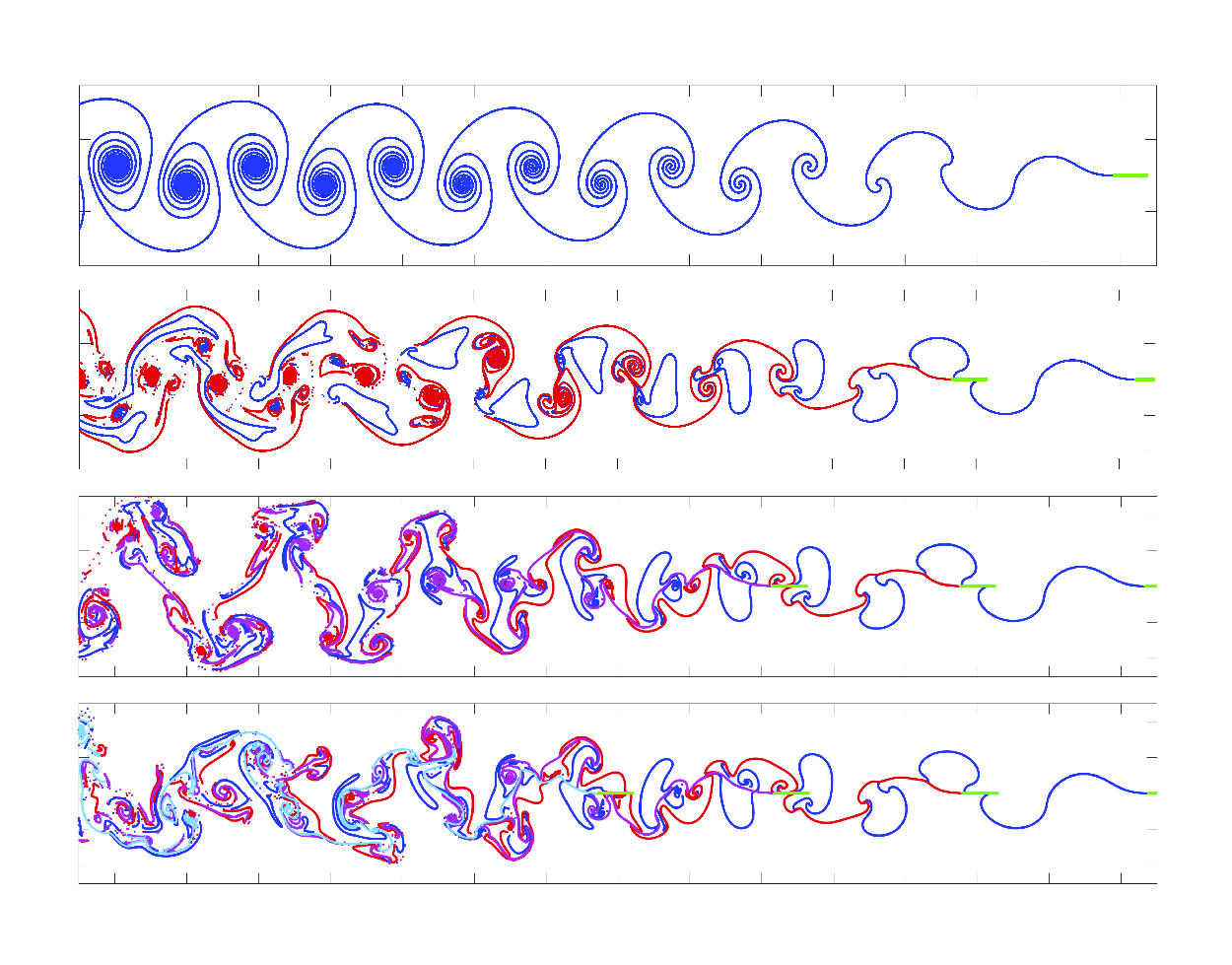
The motion of several plates in an inviscid and incompressible fluid is studied numerically using a vortex sheet model. Two to four plates are initially placed in line, separated by a specified distance, and actuated in the vertical direction with a prescribed oscillatory heaving motion. The vertical motion induces the plates’ horizontal acceleration due to their self-induced thrust and fluid drag forces. In certain parameter regimes, the plates adopt equilibrium ‘schooling modes’, wherein they translate at a steady horizontal velocity while maintaining a constant separation distance between them. The separation distances are found to be quantised on the flapping wavelength. As either the number of plates increases or the flapping amplitude decreases, the schooling modes destabilise via oscillations that propagate downstream from the leader and cause collisions between the plates, an instability that is similar to that observed in recent experiments on flapping wings in a water tank (Newbolt et al., 2024, Nat. Commun., vol. 15, 3462). A simple control mechanism is implemented, wherein each plate accelerates or decelerates according to its velocity relative to the plate directly ahead by modulating its own flapping amplitude. This mechanism is shown to successfully stabilise the schooling modes, with remarkable impact on the regularity of the vortex pattern in the wake. Several phenomena observed in the simulations are obtained by a reduced model based on linear thin-aerofoil theory.
Ficopomatus uschakovi has been reported in Galveston Bay (GB), Texas, USA, in taxonomic lists and studies of biofouling communities since 2017; however, after 2 years (from 2022 to 2024) of no observations of this species in the system, we report the first seasonal outbreak after the landfall of Hurricane Beryl in the summer of 2024, followed by 2 weeks of heavy rain, decreasing the salinity at the collection site. In this study, we provide the first genetic characterization of the specimens of F. cf. uschakovi from GB using mitochondrial cytochrome oxidase b DNA sequence data. Results demonstrated that specimens of F. cf. uschakovi in GB belong to the same genetic species as reported on both of coasts of Mexico, the Gulf coast of Florida, and Thailand. The presence of shared haplotypes suggests possible initial introduction from Asia and subsequent expansion of F. cf. uschakovi populations. The comparison of the morphological characters with reports from nearby localities showed a variation in the number of rows and spines on the operculum and in the tube colouration. This study highlights the importance of morphological and genetic analysis for reliable identification of invasive species, the need for wide geographical sampling, as well as examinations of the ecological drivers of F. cf. uschakovi outbreaks.
Interest in probiotics and prebiotics in sports nutrition is growing, but research on Jordanian athletes remains limited. While gut microbiota influences athletic performance, little is known about athletes’ understanding and use of probiotic- and prebiotic-rich foods in this region. This exploratory study investigates the knowledge, dietary habits, and correlations with gastrointestinal (GI) problems among Jordanian athletes to inform future research and interventions. The study provides insights into how awareness and consumption of gut-supportive foods can impact GI health, offering broader nutritional implications for global dietary strategies for athletes. A standardised questionnaire was administered to 324 athletes (ages 18–22) to assess knowledge, dietary practices, and GI symptoms. Descriptive statistics summarised the data, and chi-square tests examined associations among knowledge, diet, and GI symptoms (p < 0.05). Knowledge and diet were scored based on correct responses and reported intake of gut-supporting foods. Results showed that 55.9% of athletes were familiar with probiotics and 32.1% with prebiotics. The majority reported low consumption of probiotic- and prebiotic-rich foods, with 72.2% scoring low on diet intake. Although 60.5% seldom consumed fast food, overall intake of gut-supportive foods was limited. No statistically significant associations were found, but a weak positive trend between dietary habits and GI symptoms was observed, suggesting diet may have a modest influence on GI health. Living arrangements influenced both dietary choices and GI symptoms. This study highlights the need for targeted nutrition education to improve awareness and intake of probiotics and prebiotics, potentially supporting GI health and enhancing athletic performance.
Avocado is a delicious fruit crop having great economic importance. Understanding the extent of variability present in the existing germplasm is important to identify genotypes with specific traits and their utilization in crop improvement. The information on genetic variability with respect to morphological and biochemical traits in Indian avocados is limited and as it has hindered genetic improvement of the crop. In the current study, 83 avocado accessions from different regions of India were assessed for important 17 morphological and 8 biochemical traits. The results showed the existence of wide variability for traits such as fruit weight (75.88–934.12 g), pulp weight (48.08–736.19 g), seed weight (6.37–32.62 g), FRAP activity (27.65–119.81 mg AEAC/100 g), total carotenoids (0.96–7.17 mg/100 g), oil content (4.91–25.49%) and crude fibre (6.85–20.75%) in the studied accessions. The first three components of principal component analysis explained 54.79 per cent of total variance. Traits such as fruit weight, pulp weight, seed weight, moisture and oil content contributed more significantly towards total variance compared to other traits. The dendrogram constructed based on Euclidean distance wards minimum variance method divided 83 accessions into two major groups and nine sub clusters suggesting wide variability in the accessions with respect to studied traits. In this study, superior accessions for important traits such as fruit size (PA-102, PA-012), high pulp recovery (PA-036, PA-082,), thick peel (PA-084, PA-043, PA-011, PA-008), high carotenoids (PA-026, PA-096) and high oil content (PA-044, PA-043, PA-046, PA-045) were identified which have potential utility in further crop improvement programmes.
Risks and priorities change during the management of public health incidents. Here we describe a new tool, the Incident Management Measurement Tool (IMMT), that can be used to inform midcourse corrections during public health emergencies and realistic exercises.
Methods
We developed the IMMT through a literature review and subject matter expert interviews. We field tested the tool in 23 incidents ranging in size, duration, and complexity, making changes based on user feedback.
Results
The IMMT consists of 2 modular data collection methods, a survey of the incident management team and a protocol for a peer assessor. Pilot testing suggested that the tool is valid, reliable, feasible, and useful.
Conclusions
Measurement of public health incident management is feasible and may be useful for improving response times and outcomes. Moreover, a limited set of standard measures is relevant to a wide range of incident response contexts.
This paper discusses the syntactic behaviour of a small subset of object control verbs that have an implicative interpretation (e.g. obrigar ‘force’, impedir ‘prevent’) as well as the behaviour of superficially similar syntactic causatives in European Portuguese. By exploring different syntactic properties and giving special attention to inflected infinitives as complements to the two classes of verbs, we argue that implicative object control verbs are ambiguous between true control verbs (which are ditransitive) and syntactic causatives (which take a single, clausal, internal argument). To this extent, we present an argument defying Landau’s (2015) analysis of control under these verbs as predication. We also argue that the implicative interpretation of these verbs is not determined by the syntactic nature of their complement: This interpretation is maintained in both the causative and the control counterparts of the verb. By comparing implicative object control verbs and the understudied and superficially similar pôr a ‘put to / make’ and deixar a ‘put to / make’, and by highlighting the distribution and interpretation of inflected infinitives in their complements, we can argue that the latter are unambiguous syntactic causatives, which take as complement a small clause in which we internally observe control.
Posture-related musculoskeletal issues among office workers are a significant health concern, mainly due to long periods spent in static positions. This research presents a Posture Lab which is a workplace-based solution through an easy-to-use posture monitoring system, allowing employees to assess their posture. The Posture Lab focuses on two key aspects: Normal Head Posture (NHP) versus Forward Head Posture (FHP) measurement and thoracic spine kyphosis. Craniovertebral (CA) and Shoulder Angles (SA) quantify NHP and FHP. The Kyphosis Angle (KA) is for measuring normal thoracic spine and kyphosis. To measure these angles, the system uses computer vision technology with ArUco markers detection via a webcam to analyze head positions. Additionally, wearable accelerometer sensors measure kyphosis by checking the angles of inclination. The framework includes a web-based user interface for registration and specialized desktop applications for different measurement protocols. A RESTful API enables system communication and centralized data storage for reporting. The Posture Lab serves as an effective tool for organizations to evaluate employee postures and supports early intervention strategies, allowing timely referrals to healthcare providers if any potential musculoskeletal issues are identified. The Posture Lab has also shown medium to very high correlations with standard 2D motion analysis methods – Kinovea – for CA, SA, and KA in FHP with kyphosis measurements (r = 0.607, 0.704, and 0.992) and shown high to very high correlations in NHP with normal thoracic spine measurements (r = 0.809, 0.748, and 0.778), with significance at p < .01, utilizing the Pearson correlation coefficient.
Our work is motivated by obtaining solutions to the quantum reflection equation (qRE) by categorical methods. To start, given a braided monoidal category ${\mathcal {C}}$ and ${\mathcal {C}}$-module category ${\mathcal {M}}$, we introduce a version of the Drinfeld center ${\mathcal {Z}}({\mathcal {C}})$ of ${\mathcal {C}}$ adapted for ${\mathcal {M}}$; we refer to this category as the reflective center${\mathcal {E}}_{\mathcal {C}}({\mathcal {M}})$ of ${\mathcal {M}}$. Just like ${\mathcal {Z}}({\mathcal {C}})$ is a canonical braided monoidal category attached to ${\mathcal {C}}$, we show that ${\mathcal {E}}_{\mathcal {C}}({\mathcal {M}})$ is a canonical braided module category attached to ${\mathcal {M}}$; its properties are investigated in detail.
Our second goal pertains to when ${\mathcal {C}}$ is the category of modules over a quasitriangular Hopf algebra H, and ${\mathcal {M}}$ is the category of modules over an H-comodule algebra A. We show that the reflective center ${\mathcal {E}}_{\mathcal {C}}({\mathcal {M}})$ here is equivalent to a category of modules over an explicit algebra, denoted by $R_H(A)$, which we call the reflective algebra of A. This result is akin to ${\mathcal {Z}}({\mathcal {C}})$ being represented by the Drinfeld double ${\operatorname {Drin}}(H)$ of H. We also study the properties of reflective algebras.
Our third set of results is also in the Hopf setting above. We show that reflective algebras are quasitriangular H-comodule algebras, and we examine their corresponding quantum K-matrices; this yields solutions to the qRE. We also establish that the reflective algebra $R_H(\mathbb {k})$ is an initial object in the category of quasitriangular H-comodule algebras, where $\mathbb {k}$ is the ground field. The case when H is the Drinfeld double of a finite group is illustrated.
Recurrent respiratory papillomatosis is a benign disease caused by human papillomavirus that often requires frequent surgical intervention. In the UK, microdebridement is the most common technique compared to 3.3 per cent of procedures performed with coblation. This is the first study to compare the efficacy and safety profile of microdebriders versus coblation in children.
Methods
Demographic data and surgical outcomes were collected retrospectively for all children with recurrent respiratory papillomatosis over an eight-year period.
Results
Seventeen children with recurrent respiratory papillomatosis underwent a total of three hundred operations, including 182 coblation (60.7 per cent) and 113 microdebrider procedures (37.7 per cent). The complication rate was 3.8 per cent for coblation and 7.1 per cent for microdebridement (p = 0.22). There was no significant difference in the time interval between coblation and microdebrider procedures (p = 0.21).
Conclusion
In children with recurrent respiratory papillomatosis, this study demonstrated a comparable efficacy and safety profile for surgical intervention with coblation versus the currently favoured microdebrider technique.
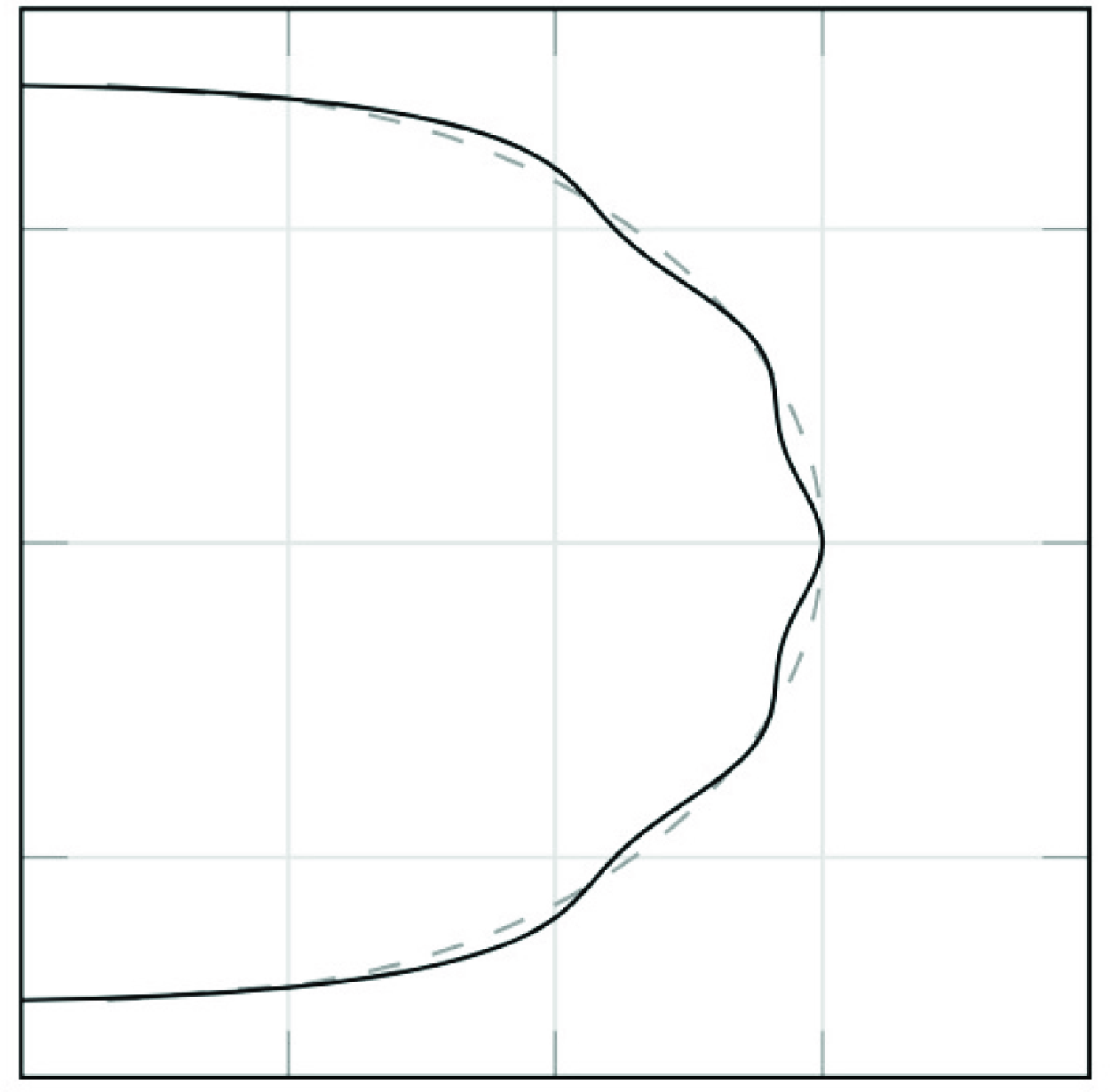
We present a numerical scheme that solves for the self-similar viscous fingers that emerge from the Saffman–Taylor instability in a divergent wedge. This is based on the formulation by Ben Amar (1991, Phys. Rev. A, vol. 44, pp. 3673–3685). It is demonstrated that there exists a countably infinite set of selected solutions, each with an associated relative finger angle, and furthermore, solutions can be characterised by the number of ripples located at the tip of their finger profiles. Our numerical scheme allows us to observe these ripples and measure them, demonstrating that the amplitudes are exponentially small in terms of the surface tension; the selection mechanism is driven by these exponentially small contributions. A recently published paper derived the selection mechanism for this problem using exponential asymptotic analytical techniques, and obtained bifurcation diagrams that we compare with our numerical results.