Volume 14 - 2026
Latest volume of Forum of Mathematics, Pi
Contents
Algebraic and Complex Geometry
Optimal bounds in Bend-and-Break
- Part of:
-
- Published online by Cambridge University Press:
- 06 May 2026, e16
-
- Article
-
- You have access
- Open access
- HTML
- Export citation
Number Theory
On local Galois deformation rings: generalised reductive groups
- Part of:
-
- Published online by Cambridge University Press:
- 30 April 2026, e15
-
- Article
-
- You have access
- Open access
- HTML
- Export citation
Integral models of Shimura varieties with parahoric level structure, II
- Part of:
-
- Published online by Cambridge University Press:
- 27 April 2026, e14
-
- Article
-
- You have access
- Open access
- HTML
- Export citation
Differential Equations
Global inviscid limit of 2D, stationary Navier-Stokes and stability of Prandtl expansions
- Part of:
-
- Published online by Cambridge University Press:
- 17 April 2026, e13
-
- Article
-
- You have access
- Open access
- HTML
- Export citation
-
In this work, we establish the convergence of 2D, stationary Navier-Stokes flows with viscosity $\varepsilon> 0$, $(u^\varepsilon , v^\varepsilon )$ to the classical Prandtl boundary layer, $(\bar {u}_p, \bar {v}_p)$, posed on the domain $(0, \infty ) \times (0, \infty )$:
  $$ \begin{align*} \| u^\varepsilon - \bar{u}_p \|_{L^\infty_y} \lesssim \sqrt{\varepsilon} \langle x \rangle^{- \frac 1 4 + \delta}, \qquad \| v^\varepsilon - \sqrt{\varepsilon} \bar{v}_p \|_{L^\infty_y} \lesssim \sqrt{\varepsilon} \langle x \rangle^{- \frac 1 2}. \end{align*} $$
This validates Prandtl’s boundary layer theory globally in the x-variable for a large class of boundary layers, including the entire one parameter family of the classical Blasius profiles, with sharp decay rates. The result demonstrates asymptotic stability in two senses simultaneously: (1) asymptotic as $\varepsilon \rightarrow 0$ and (2) asymptotic as $x \rightarrow \infty $. In particular, our result provides the first rigorous confirmation for the Navier-Stokes equations that the boundary layer cannot “separate” in these stable regimes, which is very important for physical and engineering applications.


Topology
Equivariant formality of the little disks operad
- Part of:
-
- Published online by Cambridge University Press:
- 06 April 2026, e12
-
- Article
-
- You have access
- Open access
- HTML
- Export citation
-
The little n-disks operad is $SO(n)$ and $O(n)$-equivariantly formal over the rationals. Equivalently, the oriented and unoriented framed little disks operads are rationally formal as $\infty $-operads.


Algebraic and Complex Geometry
Quasi-BPS categories for K3 surfaces
- Part of:
-
- Published online by Cambridge University Press:
- 30 March 2026, e11
-
- Article
-
- You have access
- Open access
- HTML
- Export citation
Number Theory
Excursion operators and the stable Bernstein center
- Part of:
-
- Published online by Cambridge University Press:
- 10 March 2026, e10
-
- Article
-
- You have access
- Open access
- HTML
- Export citation
Topology
Pseudo-isotopies of simply connected 4-manifolds
- Part of:
-
- Published online by Cambridge University Press:
- 03 March 2026, e9
-
- Article
-
- You have access
- Open access
- HTML
- Export citation
-
Perron and Quinn gave independent proofs in 1986 that every topological pseudo-isotopy of a simply-connected, compact topological 4-manifold is isotopic to the identity. Another result of Quinn is that every smooth pseudo-isotopy of a simply-connected, compact, smooth 4-manifold is smoothly stably isotopic to the identity. From this he deduced that $\pi _4(\operatorname {\mathrm {TOP}}(4)/\operatorname {\mathrm {O}}(4)) = 0$. A replacement criterion is used at a key juncture in Quinn’s proofs, but the justification given for it is incorrect. We provide different arguments that bypass the replacement criterion, thus completing Quinn’s proofs of both the topological and the stable smooth pseudo-isotopy theorems. We discuss the replacement criterion and state it as an open problem.
Number Theory
Large sieve inequalities for exceptional Maass forms and the greatest prime factor of $n^2+1$
- Part of:
-
- Published online by Cambridge University Press:
- 24 February 2026, e8
-
- Article
-
- You have access
- Open access
- HTML
- Export citation
-
We prove new large sieve inequalities for the Fourier coefficients $\rho _{j\mathfrak {a}}(n)$ of exceptional Maass forms of a given level, weighted by sequences $(a_n)$ with sparse Fourier transforms – including two key types of sequences that arise in the dispersion method. These give the first savings in the exceptional spectrum for the critical case of sequences as long as the level, and lead to improved bounds for various multilinear forms of Kloosterman sums. As an application, we show that the greatest prime factor of $n^2+1$ is infinitely often greater than $n^{1.3}$, improving Merikoski’s previous threshold of $n^{1.279}$. We also announce applications to the exponents of distribution of primes and smooth numbers in arithmetic progressions.


Algebra
Rigidity of non-negligible objects of moderate growth in braided categories
- Part of:
-
- Published online by Cambridge University Press:
- 12 February 2026, e7
-
- Article
-
- You have access
- Open access
- HTML
- Export citation
-
Let $\mathbb {k}$ be a field, and let $\mathcal {C}$ be a Cauchy complete $\mathbb {k}$-linear braided category with finite-dimensional morphism spaces and
  . We call an indecomposable object X of $\mathcal C$ non-negligible if there exists $Y\in \mathcal {C}$ such that
  is a direct summand of $Y\otimes X$. We prove that every non-negligible object $X\in \mathcal {C}$ such that $\dim \operatorname {End}(X^{\otimes n})<n!$ for some n is automatically rigid. In particular, if $\mathcal {C}$ is semisimple of moderate growth and weakly rigid, then $\mathcal {C}$ is rigid. As applications, we simplify Huang’s proof of rigidity of representation categories of certain vertex operator algebras, and we get that for a finite semisimple monoidal category $\mathcal {C}$, the data of a $\mathcal {C}$-modular functor is equivalent to a modular fusion category structure on $\mathcal {C}$, answering a question of Bakalov and Kirillov. Furthermore, we show that if $\mathcal {C}$ is rigid and has moderate growth, then the quantum trace of any nilpotent endomorphism in $\mathcal {C}$ is zero. Hence $\mathcal {C}$ admits a semisimplification, which is a semisimple braided tensor category of moderate growth. Finally, we discuss rigidity in braided r-categories which are not semisimple, which arise in logarithmic conformal field theory. These results allow us to simplify a number of arguments of Kazhdan and Lusztig.


 . We call an indecomposable object

 is a direct summand of


Differential Geometry and Geometric Analysis
Positivity and representations of surface groups
- Part of:
-
- Published online by Cambridge University Press:
- 09 February 2026, e6
-
- Article
-
- You have access
- Open access
- HTML
- Export citation
-
In [24, 26] Guichard and Wienhard introduced the notion of $\Theta $-positivity, a generalization of Lusztig’s total positivity to real Lie groups that are not necessarily split.
Based on this notion, we introduce in this paper $\Theta $-positive representations of surface groups. We prove that $\Theta $-positive representations of closed surface groups are $\Theta $-Anosov. This implies that $\Theta $-positive representations are discrete and faithful and that the set of $\Theta $-positive representations is open in the representation variety.
We further establish important properties on limits of $\Theta $-positive representations, proving that the set of $\Theta $-positive representations is closed in the set of representations containing a $\Theta $-proximal element. This is used in [3] to prove the closedness of the set of $\Theta $-positive representations.


Number Theory
Unconditional correctness of recent quantum algorithms for factoring and computing discrete logarithms
- Part of:
-
- Published online by Cambridge University Press:
- 09 February 2026, e5
-
- Article
-
- You have access
- Open access
- HTML
- Export citation
-
In 1994, Shor introduced his famous quantum algorithm to factor integers and compute discrete logarithms in polynomial time. In 2023, Regev proposed a multidimensional version of Shor’s algorithm that requires far fewer quantum gates. His algorithm relies on a number-theoretic conjecture on the elements in $(\mathbb {Z}/N\mathbb {Z})^{\times }$ that can be written as short products of very small prime numbers. We prove a version of this conjecture using tools from analytic number theory such as zero-density estimates. As a result, we obtain an unconditional proof of correctness of this improved quantum algorithm and of subsequent variants.

Algebraic and Complex Geometry
Bounded geometry for PCF-special subvarieties
- Part of:
-
- Published online by Cambridge University Press:
- 05 February 2026, e4
-
- Article
-
- You have access
- Open access
- HTML
- Export citation
-
For each integer $d\geq 2$, let $\mathrm {M}_d$ denote the moduli space of maps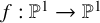 $f: \mathbb {P}^1\to \mathbb {P}^1$ of degree d. We study the geometric configurations of subsets of postcritically finite (or PCF) maps in $\mathrm {M}_d$. A complex-algebraic subvariety $Y \subset \mathrm {M}_d$ is said to be PCF-special if it contains a Zariski-dense set of PCF maps. Here we prove that there are only finitely many positive-dimensional irreducible PCF-special subvarieties in $\mathrm {M}_d$ with degree $\leq D$. In addition, there exist constants $N = N(D,d)$ and $B = B(D,d)$ so that for any complex algebraic subvariety $X \subset \mathrm {M}_d$ of degree $\leq D$, the Zariski closure $\overline {X \cap \mathrm {PCF}_d}$ has at most N irreducible components, each with degree $\leq B$. We also prove generalizations of these results for points with small critical height in $\mathrm {M}_d(\overline {\mathbb {Q}})$.


Analysis
Nonlinear stability of extremal Reissner–Nordström black holes in spherical symmetry
- Part of:
-
- Published online by Cambridge University Press:
- 14 January 2026, e3
-
- Article
-
- You have access
- Open access
- HTML
- Export citation
-
In this paper, we prove the codimension-one nonlinear asymptotic stability of the extremal Reissner–Nordström family of black holes in the spherically symmetric Einstein–Maxwell-neutral scalar field model, up to and including the event horizon. More precisely, we show that there exists a teleologically defined, codimension-one “submanifold” ${\mathfrak{M}}_{\mathrm{stab}}$ of the moduli space of spherically symmetric characteristic data for the Einstein–Maxwell-scalar field system lying close to the extremal Reissner–Nordström family, such that any data in ${\mathfrak{M}}_{\mathrm{stab}}$ evolve into a solution with the following properties as time goes to infinity: (i) the metric decays to a member of the extremal Reissner–Nordström family uniformly up to the event horizon, (ii) the scalar field decays to zero pointwise and in an appropriate energy norm, (iii) the first translation-invariant ingoing null derivative of the scalar field is approximately constant on the event horizon $\mathcal H^+$, (iv) for “generic” data, the second translation-invariant ingoing null derivative of the scalar field grows linearly along the event horizon. Due to the coupling of the scalar field to the geometry via the Einstein equations, suitable components of the Ricci tensor exhibit nondecay and growth phenomena along the event horizon. Points (i) and (ii) above reflect the “stability” of the extremal Reissner–Nordström family and points (iii) and (iv) verify the presence of the celebrated Aretakis instability [11] for the linear wave equation on extremal Reissner–Nordström black holes in the full nonlinear Einstein–Maxwell-scalar field model.


Algebraic and Complex Geometry
Noether-Lefschetz cycles on the moduli space of abelian varieties
- Part of:
-
- Published online by Cambridge University Press:
- 13 January 2026, e2
-
- Article
-
- You have access
- Open access
- HTML
- Export citation
-
The locus of nonsimple abelian varieties in the moduli space of principally polarized abelian varieties gives rise to Noether-Lefschetz cycles. We study their intersection theoretic properties using the tautological projection constructed in [4], and show that projection defines a homomorphism when restricted to cycles supported on that locus. Using Hecke correspondences and the pullback by Torelli we prove that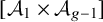 $[\mathcal {A}_1 \times \mathcal A_{g-1}]$ is not tautological in the sense of [38] for $g=12$ and $g\geq 16$ even. We also explore the connections between Noether-Lefschetz cycles and the Gromov-Witten theory of a moving elliptic curve.


Mathematical Physics
Multiplicative Jensen’s formula and quantitative global theory of one-frequency Schrödinger operators
- Part of:
-
- Published online by Cambridge University Press:
- 09 January 2026, e1
-
- Article
-
- You have access
- Open access
- HTML
- Export citation