Refine listing
Actions for selected content:
1363439 results in Open Access
TWO NEW LOOKS AT JESUS - Nathanael J. Andrade, Killing the Messiah. The Trial and Crucifixion of Jesus of Nazareth. Pp. xii + 280, ills, maps. New York: Oxford University Press, 2025. Cased, £19.99, US$29.95. ISBN: 978-0-19-775248-7. - Markus Bockmuehl (ed.), The New Cambridge Companion to Jesus. Pp. xiv + 424, colour ills. Cambridge: Cambridge University Press, 2025. Cased, £85, US$110 (Paper, £26.99, US$35.99). ISBN: 978-1-009-23302-6 (978-1-009-23299-9 pbk).
-
- Journal:
- The Classical Review / Volume 76 / Issue 1 / April 2026
- Published online by Cambridge University Press:
- 16 February 2026, pp. 276-280
- Print publication:
- April 2026
-
- Article
- Export citation
Formalism in Economics: Perspectives from Philosophy of Mathematics
-
- Journal:
- Economics & Philosophy , First View
- Published online by Cambridge University Press:
- 16 February 2026, pp. 1-19
-
- Article
-
- You have access
- Open access
- HTML
- Export citation
Obsessive–compulsive disorder (OCD): often a missed diagnosis and misdiagnosed
-
- Journal:
- The British Journal of Psychiatry , FirstView
- Published online by Cambridge University Press:
- 16 February 2026, pp. 1-3
-
- Article
-
- You have access
- HTML
- Export citation
Robert Stern (1962–2024)
-
- Journal:
- Hegel Bulletin , First View
- Published online by Cambridge University Press:
- 16 February 2026, pp. 1-6
-
- Article
-
- You have access
- HTML
- Export citation
Housing Price Surge and Political Trust in Urban China: A Cohort-based Analysis – ADDENDUM
-
- Journal:
- The China Quarterly / Volume 265 / March 2026
- Published online by Cambridge University Press:
- 16 February 2026, p. 290
- Print publication:
- March 2026
-
- Article
- Export citation
Higher topological complexity of Seifert fibred manifolds
- Part of
-
- Journal:
- Proceedings of the Royal Society of Edinburgh. Section A: Mathematics , First View
- Published online by Cambridge University Press:
- 16 February 2026, pp. 1-20
-
- Article
- Export citation
-
In this article, we investigate the higher topological complexity of oriented Seifert fibred manifolds that are Eilenberg–MacLane spaces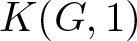 $K(G,1)$ with infinite fundamental group $G$. We first refine the cohomological lower bounds for higher topological complexity by introducing the notion of higher topological complexity weights. As an application, we show that the $r^{\text{th}}$ topological complexity of these manifolds lies in $\{3r-1, 3r, 3r+1\}$, and characterize large families where the value is $3r$ or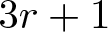 $3r+1$. Additionally, we establish a sufficient condition for higher topological complexity to be exactly $3r$ when the base surface is orientable and aspherical. Finally, we show that the higher topological complexity of the wedge of finitely many closed, orientable, aspherical $3$-manifolds is exactly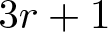 $3r+1$.


B vitamins, immune function and the ageing brain: a critical review of the evidence, mechanisms and potential role of the gut microbiome
-
- Journal:
- Proceedings of the Nutrition Society , First View
- Published online by Cambridge University Press:
- 16 February 2026, pp. 1-12
-
- Article
-
- You have access
- Open access
- HTML
- Export citation
Decay estimate for subcritical semilinear damped wave equations with slowly decreasing data – CORRIGENDUM
-
- Journal:
- Proceedings of the Royal Society of Edinburgh. Section A: Mathematics , First View
- Published online by Cambridge University Press:
- 16 February 2026, p. 1
-
- Article
-
- You have access
- HTML
- Export citation
Transnational Transphobias: Feminist and Traditionalist Anti-Gender Affective Orientations
-
- Journal:
- Politics & Gender , First View
- Published online by Cambridge University Press:
- 16 February 2026, pp. 1-27
-
- Article
-
- You have access
- Open access
- HTML
- Export citation
APPROACHING ANCIENT IDENTITIES: FROM MESOPOTAMIA TO BYZANTIUM - Joseph Skinner / Vicky Manolopoulou / Christina Tsouparopoulou (edd.), Identities in Antiquity. Pp. xxxii + 558, ills, maps. London and New York: Routledge, 2025. Cased, £230. ISBN: 978-1-138-54516-8.
-
- Journal:
- The Classical Review / Volume 76 / Issue 1 / April 2026
- Published online by Cambridge University Press:
- 16 February 2026, pp. 174-176
- Print publication:
- April 2026
-
- Article
- Export citation
ROMAN CONCEPTS OF LEADERSHIP
-
- Journal:
- The Classical Review / Volume 76 / Issue 1 / April 2026
- Published online by Cambridge University Press:
- 16 February 2026, pp. 61-66
- Print publication:
- April 2026
-
- Article
-
- You have access
- Open access
- HTML
- Export citation

Equilibrium states of rotating turbulence in a closed basin with topography
-
- Journal:
- Journal of Fluid Mechanics / Volume 1029 / 25 February 2026
- Published online by Cambridge University Press:
- 16 February 2026, A27
-
- Article
- Export citation
CIVIL WAR AND AUTOCRACY IN ROME - Dominik Maschek, The Roman Civil Wars. The Archaeology and History of a Crisis. Translated by Joseph O’Donnell. Pp. x + 416, figs, ills, maps. Liverpool: Liverpool University Press, 2025 (originally published as Die römischen Bürgerkriege, 2018). Cased, £120. ISBN: 978-1-83624-338-0. - David Potter, Master of Rome. A Life of Julius Caesar. Pp. xx + 374, maps, colour pls. New York: Oxford University Press, 2025. Cased, £22.99. ISBN: 978-0-19-086718-8.
-
- Journal:
- The Classical Review / Volume 76 / Issue 1 / April 2026
- Published online by Cambridge University Press:
- 16 February 2026, pp. 222-226
- Print publication:
- April 2026
-
- Article
- Export citation
Monetary policy, heterogeneous expectations, and the return of high inflation
- Part of
-
- Journal:
- Macroeconomic Dynamics / Volume 30 / 2026
- Published online by Cambridge University Press:
- 16 February 2026, e15
-
- Article
- Export citation
Thecate medusozoan polyp from the Upper Ordovician of Québec
-
- Journal:
- Journal of Paleontology , First View
- Published online by Cambridge University Press:
- 13 February 2026, pp. 1-11
-
- Article
-
- You have access
- Open access
- HTML
- Export citation
Vitamin A intake and status and associations with iron status, anaemia and birth outcomes of pregnant women in the Free State Province, South Africa: the Nutritional Status of Expectant Mothers and their newborn Infants (NuEMI) study
-
- Journal:
- British Journal of Nutrition / Volume 135 / Issue 11 / 14 June 2026
- Published online by Cambridge University Press:
- 13 February 2026, pp. 1164-1174
- Print publication:
- 14 June 2026
-
- Article
-
- You have access
- Open access
- HTML
- Export citation
GALOIS GROUPS OF APÉRY-LIKE SERIES MODULO PRIMES
- Part of
-
- Journal:
- Bulletin of the Australian Mathematical Society / Volume 114 / Issue 1 / August 2026
- Published online by Cambridge University Press:
- 13 February 2026, pp. 65-78
- Print publication:
- August 2026
-
- Article
-
- You have access
- Open access
- HTML
- Export citation
ON PROPERLY $\theta $
 -CONGRUENT NUMBERS OVER REAL NUMBER FIELDS
- Part of
-
- Journal:
- Bulletin of the Australian Mathematical Society / Volume 114 / Issue 1 / August 2026
- Published online by Cambridge University Press:
- 13 February 2026, pp. 59-64
- Print publication:
- August 2026
-
- Article
- Export citation
-
The notion of $\theta $
 -congruent numbers generalises the classical congruent number problem. A positive integer n is $\theta $
 -congruent if it is the area of a rational triangle with an angle $\theta $
 whose cosine is rational. Das and Saikia [‘On $\theta $
 -congruent numbers over real number fields’, Bull. Aust. Math. Soc. 103(2) (2021), 218–229] established criteria for numbers to be $\theta $
 -congruent over certain real number fields and concluded their work by posing four open questions regarding the relationship between $\theta $
 -congruent and properly $\theta $
 -congruent numbers. In this work, we provide complete answers to those questions. Indeed, we remove a technical assumption from their result on fields with degrees coprime to six, provide a definitive answer for real cubic fields without congruence restrictions, extend the analysis to fields of degree six and examine the exceptional cases $n=1, 2, 3$
 and $6$
 .
.


SOME MONOCHROMATIC PATTERNS IN NATURAL NUMBERS
- Part of
-
- Journal:
- Bulletin of the Australian Mathematical Society / Volume 113 / Issue 3 / June 2026
- Published online by Cambridge University Press:
- 13 February 2026, pp. 377-389
- Print publication:
- June 2026
-
- Article
-
- You have access
- Open access
- HTML
- Export citation
