Refine listing
Actions for selected content:
1800 results in 05xxx
Strong complete minors in digraphs
- Part of
-
- Journal:
- Combinatorics, Probability and Computing / Volume 31 / Issue 3 / May 2022
- Published online by Cambridge University Press:
- 24 September 2021, pp. 489-506
-
- Article
- Export citation
-
Kostochka and Thomason independently showed that any graph with average degree $\Omega(r\sqrt{\log r})$ contains a $K_r$ minor. In particular, any graph with chromatic number $\Omega(r\sqrt{\log r})$ contains a $K_r$ minor, a partial result towards Hadwiger’s famous conjecture. In this paper, we investigate analogues of these results in the directed setting. There are several ways to define a minor in a digraph. One natural way is as follows. A strong $\overrightarrow{K}_{\!\!r}$ minor is a digraph whose vertex set is partitioned into r parts such that each part induces a strongly connected subdigraph, and there is at least one edge in each direction between any two distinct parts. We investigate bounds on the dichromatic number and minimum out-degree of a digraph that force the existence of strong $\overrightarrow{K}_{\!\!r}$ minors as subdigraphs. In particular, we show that any tournament with dichromatic number at least 2r contains a strong $\overrightarrow{K}_{\!\!r}$ minor, and any tournament with minimum out-degree $\Omega(r\sqrt{\log r})$ also contains a strong $\overrightarrow{K}_{\!\!r}$ minor. The latter result is tight up to the implied constant and may be viewed as a strong-minor analogue to the classical result of Kostochka and Thomason. Lastly, we show that there is no function $f\;:\;\mathbb{N} \rightarrow \mathbb{N}$ such that any digraph with minimum out-degree at least f(r) contains a strong $\overrightarrow{K}_{\!\!r}$ minor, but such a function exists when considering dichromatic number.


Invariance of KMS states on graph C*-algebras under classical and quantum symmetry
- Part of
-
- Journal:
- Proceedings of the Edinburgh Mathematical Society / Volume 64 / Issue 4 / November 2021
- Published online by Cambridge University Press:
- 20 September 2021, pp. 762-778
-
- Article
- Export citation
-
We study the invariance of KMS states on graph $C^{\ast }$
 -algebras coming from strongly connected and circulant graphs under the classical and quantum symmetry of the graphs. We show that the unique KMS state for strongly connected graphs is invariant under the quantum automorphism group of the graph. For circulant graphs, it is shown that the action of classical and quantum automorphism groups preserves only one of the KMS states occurring at the critical inverse temperature. We also give an example of a graph $C^{\ast }$
 -algebra having more than one KMS state such that all of them are invariant under the action of classical automorphism group of the graph, but there is a unique KMS state which is invariant under the action of quantum automorphism group of the graph.


On the number of Hadamard matrices via anti-concentration
- Part of
-
- Journal:
- Combinatorics, Probability and Computing / Volume 31 / Issue 3 / May 2022
- Published online by Cambridge University Press:
- 10 September 2021, pp. 455-477
-
- Article
-
- You have access
- Open access
- HTML
- Export citation
-
Many problems in combinatorial linear algebra require upper bounds on the number of solutions to an underdetermined system of linear equations $Ax = b$, where the coordinates of the vector x are restricted to take values in some small subset (e.g. $\{\pm 1\}$) of the underlying field. The classical ways of bounding this quantity are to use either a rank bound observation due to Odlyzko or a vector anti-concentration inequality due to Halász. The former gives a stronger conclusion except when the number of equations is significantly smaller than the number of variables; even in such situations, the hypotheses of Halász’s inequality are quite hard to verify in practice. In this paper, using a novel approach to the anti-concentration problem for vector sums, we obtain new Halász-type inequalities that beat the Odlyzko bound even in settings where the number of equations is comparable to the number of variables. In addition to being stronger, our inequalities have hypotheses that are considerably easier to verify. We present two applications of our inequalities to combinatorial (random) matrix theory: (i) we obtain the first non-trivial upper bound on the number of $n\times n$ Hadamard matrices and (ii) we improve a recent bound of Deneanu and Vu on the probability of normality of a random $\{\pm 1\}$ matrix.


Strongly aperiodic subshifts of finite type on hyperbolic groups
- Part of
-
- Journal:
- Ergodic Theory and Dynamical Systems / Volume 42 / Issue 9 / September 2022
- Published online by Cambridge University Press:
- 09 September 2021, pp. 2740-2783
- Print publication:
- September 2022
-
- Article
-
- You have access
- Open access
- HTML
- Export citation
On the edit distance function of the random graph
- Part of
-
- Journal:
- Combinatorics, Probability and Computing / Volume 31 / Issue 2 / March 2022
- Published online by Cambridge University Press:
- 02 September 2021, pp. 345-367
-
- Article
- Export citation
-
Given a hereditary property of graphs $\mathcal{H}$ and a $p\in [0,1]$, the edit distance function $\textrm{ed}_{\mathcal{H}}(p)$ is asymptotically the maximum proportion of edge additions plus edge deletions applied to a graph of edge density p sufficient to ensure that the resulting graph satisfies $\mathcal{H}$. The edit distance function is directly related to other well-studied quantities such as the speed function for $\mathcal{H}$ and the $\mathcal{H}$-chromatic number of a random graph.
Let $\mathcal{H}$ be the property of forbidding an Erdős–Rényi random graph $F\sim \mathbb{G}(n_0,p_0)$, and let $\varphi$ represent the golden ratio. In this paper, we show that if $p_0\in [1-1/\varphi,1/\varphi]$, then a.a.s. as $n_0\to\infty$, Moreover, this holds for
 \begin{align*}{\textrm{ed}}_{\mathcal{H}}(p) = (1+o(1))\,\frac{2\log n_0}{n_0}\cdot\min\left\{\frac{p}{-\log(1-p_0)},\frac{1-p}{-\log p_0}\right\}.\end{align*} $p\in [1/3,2/3]$ for any $p_0\in (0,1)$.
A primary tool in the proof is the categorization of p-core coloured regularity graphs in the range $p\in[1-1/\varphi,1/\varphi]$. Such coloured regularity graphs must have the property that the non-grey edges form vertex-disjoint cliques.


An upper bound for the bond percolation threshold of the cubic lattice by a growth process approach
- Part of
-
- Journal:
- Journal of Applied Probability / Volume 58 / Issue 3 / September 2021
- Published online by Cambridge University Press:
- 16 September 2021, pp. 677-692
- Print publication:
- September 2021
-
- Article
- Export citation
Zarankiewicz’s problem for semilinear hypergraphs
- Part of
-
- Journal:
- Forum of Mathematics, Sigma / Volume 9 / 2021
- Published online by Cambridge University Press:
- 31 August 2021, e59
-
- Article
-
- You have access
- Open access
- HTML
- Export citation
-
A bipartite graph $H = \left (V_1, V_2; E \right )$ with $\lvert V_1\rvert + \lvert V_2\rvert = n$ is semilinear if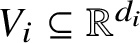 $V_i \subseteq \mathbb {R}^{d_i}$ for some $d_i$ and the edge relation E consists of the pairs of points $(x_1, x_2) \in V_1 \times V_2$ satisfying a fixed Boolean combination of s linear equalities and inequalities in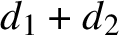 $d_1 + d_2$ variables for some s. We show that for a fixed k, the number of edges in a $K_{k,k}$-free semilinear H is almost linear in n, namely $\lvert E\rvert = O_{s,k,\varepsilon }\left (n^{1+\varepsilon }\right )$ for any $\varepsilon> 0$; and more generally, $\lvert E\rvert = O_{s,k,r,\varepsilon }\left (n^{r-1 + \varepsilon }\right )$ for a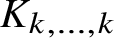 $K_{k, \dotsc ,k}$-free semilinear r-partite r-uniform hypergraph.
As an application, we obtain the following incidence bound: given $n_1$ points and $n_2$ open boxes with axis-parallel sides in $\mathbb {R}^d$ such that their incidence graph is $K_{k,k}$-free, there can be at most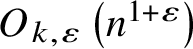 $O_{k,\varepsilon }\left (n^{1+\varepsilon }\right )$ incidences. The same bound holds if instead of boxes, one takes polytopes cut out by the translates of an arbitrary fixed finite set of half-spaces.
We also obtain matching upper and (superlinear) lower bounds in the case of dyadic boxes on the plane, and point out some connections to the model-theoretic trichotomy in o-minimal structures (showing that the failure of an almost-linear bound for some definable graph allows one to recover the field operations from that graph in a definable manner).


Powers of Principal Q-Borel ideals
- Part of
-
- Journal:
- Canadian Mathematical Bulletin / Volume 65 / Issue 3 / September 2022
- Published online by Cambridge University Press:
- 23 August 2021, pp. 633-652
- Print publication:
- September 2022
-
- Article
- Export citation
-
Fix a poset Q on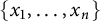 $\{x_1,\ldots ,x_n\}$. A Q-Borel monomial ideal $I \subseteq \mathbb {K}[x_1,\ldots ,x_n]$ is a monomial ideal whose monomials are closed under the Borel-like moves induced by Q. A monomial ideal I is a principal Q-Borel ideal, denoted $I=Q(m)$, if there is a monomial m such that all the minimal generators of I can be obtained via Q-Borel moves from m. In this paper we study powers of principal Q-Borel ideals. Among our results, we show that all powers of $Q(m)$ agree with their symbolic powers, and that the ideal $Q(m)$ satisfies the persistence property for associated primes. We also compute the analytic spread of $Q(m)$ in terms of the poset Q.


The distance profile of rooted and unrooted simply generated trees
- Part of
-
- Journal:
- Combinatorics, Probability and Computing / Volume 31 / Issue 3 / May 2022
- Published online by Cambridge University Press:
- 18 August 2021, pp. 368-410
-
- Article
-
- You have access
- Open access
- HTML
- Export citation
-
It is well known that the height profile of a critical conditioned Galton–Watson tree with finite offspring variance converges, after a suitable normalisation, to the local time of a standard Brownian excursion. In this work, we study the distance profile, defined as the profile of all distances between pairs of vertices. We show that after a proper rescaling the distance profile converges to a continuous random function that can be described as the density of distances between random points in the Brownian continuum random tree. We show that this limiting function a.s. is Hölder continuous of any order $\alpha<1$, and that it is a.e. differentiable. We note that it cannot be differentiable at 0, but leave as open questions whether it is Lipschitz, and whether it is continuously differentiable on the half-line $(0,\infty)$. The distance profile is naturally defined also for unrooted trees contrary to the height profile that is designed for rooted trees. This is used in our proof, and we prove the corresponding convergence result for the distance profile of random unrooted simply generated trees. As a minor purpose of the present work, we also formalize the notion of unrooted simply generated trees and include some simple results relating them to rooted simply generated trees, which might be of independent interest.


All finite sets are Ramsey in the maximum norm
- Part of
-
- Journal:
- Forum of Mathematics, Sigma / Volume 9 / 2021
- Published online by Cambridge University Press:
- 09 August 2021, e55
-
- Article
-
- You have access
- Open access
- HTML
- Export citation
-
For two metric spaces $\mathbb X$ and $\mathcal Y$ the chromatic number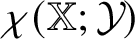 $\chi ({{\mathbb X}};{{\mathcal{Y}}})$ of $\mathbb X$ with forbidden $\mathcal Y$ is the smallest k such that there is a colouring of the points of $\mathbb X$ with k colors that contains no monochromatic copy of $\mathcal Y$. In this article, we show that for each finite metric space $\mathcal {M}$ that contains at least two points the value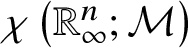 $\chi \left ({{\mathbb R}}^n_\infty; \mathcal M \right )$ grows exponentially with n. We also provide explicit lower and upper bounds for some special $\mathcal M$.


ON EDGE-PRIMITIVE GRAPHS WITH SOLUBLE EDGE-STABILIZERS
- Part of
-
- Journal:
- Journal of the Australian Mathematical Society / Volume 113 / Issue 2 / October 2022
- Published online by Cambridge University Press:
- 06 August 2021, pp. 160-187
-
- Article
- Export citation
-
A graph is edge-primitive if its automorphism group acts primitively on the edge set, and $2$-arc-transitive if its automorphism group acts transitively on the set of $2$-arcs. In this paper, we present a classification for those edge-primitive graphs that are $2$-arc-transitive and have soluble edge-stabilizers.


On the distribution of winners’ scores in a round-robin tournament
- Part of
-
- Journal:
- Probability in the Engineering and Informational Sciences / Volume 36 / Issue 4 / October 2022
- Published online by Cambridge University Press:
- 06 August 2021, pp. 1098-1102
-
- Article
- Export citation
-
In a classical chess round-robin tournament, each of $n$ players wins, draws, or loses a game against each of the other $n-1$ players. A win rewards a player with 1 points, a draw with 1/2 point, and a loss with 0 points. We are interested in the distribution of the scores associated with ranks of $n$ players after ${{n \choose 2}}$ games, that is, the distribution of the maximal score, second maximum, and so on. The exact distribution for a general $n$ seems impossible to obtain; we obtain a limit distribution.


On Turán exponents of bipartite graphs
- Part of
-
- Journal:
- Combinatorics, Probability and Computing / Volume 31 / Issue 2 / March 2022
- Published online by Cambridge University Press:
- 04 August 2021, pp. 333-344
-
- Article
- Export citation
-
A long-standing conjecture of Erdős and Simonovits asserts that for every rational number $r\in (1,2)$ there exists a bipartite graph H such that $\mathrm{ex}(n,H)=\Theta(n^r)$. So far this conjecture is known to be true only for rationals of form $1+1/k$ and $2-1/k$, for integers $k\geq 2$. In this paper, we add a new form of rationals for which the conjecture is true: $2-2/(2k+1)$, for $k\geq 2$. This in turn also gives an affirmative answer to a question of Pinchasi and Sharir on cube-like graphs. Recently, a version of Erdős and Simonovits $^{\prime}$s conjecture, where one replaces a single graph by a finite family, was confirmed by Bukh and Conlon. They proposed a construction of bipartite graphs which should satisfy Erdős and Simonovits $^{\prime}$s conjecture. Our result can also be viewed as a first step towards verifying Bukh and Conlon $^{\prime}$s conjecture. We also prove an upper bound on the Turán number of theta graphs in an asymmetric setting and employ this result to obtain another new rational exponent for Turán exponents: $r=7/5$.


LIE ALGEBRA MODULES WHICH ARE LOCALLY FINITE AND WITH FINITE MULTIPLICITIES OVER THE SEMISIMPLE PART
- Part of
-
- Journal:
- Nagoya Mathematical Journal / Volume 246 / June 2022
- Published online by Cambridge University Press:
- 02 August 2021, pp. 430-470
-
- Article
- Export citation
-
For a finite-dimensional Lie algebra $\mathfrak {L}$ over $\mathbb {C}$ with a fixed Levi decomposition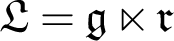 $\mathfrak {L} = \mathfrak {g} \ltimes \mathfrak {r}$, where $\mathfrak {g}$ is semisimple, we investigate $\mathfrak {L}$-modules which decompose, as $\mathfrak {g}$-modules, into a direct sum of simple finite-dimensional $\mathfrak {g}$-modules with finite multiplicities. We call such modules $\mathfrak {g}$-Harish-Chandra modules. We give a complete classification of simple $\mathfrak {g}$-Harish-Chandra modules for the Takiff Lie algebra associated to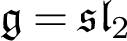 $\mathfrak {g} = \mathfrak {sl}_2$, and for the Schrödinger Lie algebra, and obtain some partial results in other cases. An adapted version of Enright’s and Arkhipov’s completion functors plays a crucial role in our arguments. Moreover, we calculate the first extension groups of infinite-dimensional simple $\mathfrak {g}$-Harish-Chandra modules and their annihilators in the universal enveloping algebra, for the Takiff $\mathfrak {sl}_2$ and the Schrödinger Lie algebra. In the general case, we give a sufficient condition for the existence of infinite-dimensional simple $\mathfrak {g}$-Harish-Chandra modules.


Lower bound on the size of a quasirandom forcing set of permutations
- Part of
-
- Journal:
- Combinatorics, Probability and Computing / Volume 31 / Issue 2 / March 2022
- Published online by Cambridge University Press:
- 27 July 2021, pp. 304-319
-
- Article
-
- You have access
- Open access
- HTML
- Export citation
-
A set S of permutations is forcing if for any sequence $\{\Pi_i\}_{i \in \mathbb{N}}$ of permutations where the density $d(\pi,\Pi_i)$ converges to $\frac{1}{|\pi|!}$ for every permutation $\pi \in S$, it holds that $\{\Pi_i\}_{i \in \mathbb{N}}$ is quasirandom. Graham asked whether there exists an integer k such that the set of all permutations of order k is forcing; this has been shown to be true for any $k\ge 4$. In particular, the set of all 24 permutations of order 4 is forcing. We provide the first non-trivial lower bound on the size of a forcing set of permutations: every forcing set of permutations (with arbitrary orders) contains at least four permutations.


Symmetry of Narayana Numbers and Rowvacuation of Root Posets
- Part of
-
- Journal:
- Forum of Mathematics, Sigma / Volume 9 / 2021
- Published online by Cambridge University Press:
- 26 July 2021, e53
-
- Article
-
- You have access
- Open access
- HTML
- Export citation
-
For a Weyl group W of rank r, the W-Catalan number is the number of antichains of the poset of positive roots, and the W-Narayana numbers refine the W-Catalan number by keeping track of the cardinalities of these antichains. The W-Narayana numbers are symmetric – that is, the number of antichains of cardinality k is the same as the number of cardinality $r-k$. However, this symmetry is far from obvious. Panyushev posed the problem of defining an involution on root poset antichains that exhibits the symmetry of the W-Narayana numbers.
Rowmotion and rowvacuation are two related operators, defined as compositions of toggles, that give a dihedral action on the set of antichains of any ranked poset. Rowmotion acting on root posets has been the subject of a significant amount of research in the recent past. We prove that for the root posets of classical types, rowvacuation is Panyushev’s desired involution.

Spectral gap in random bipartite biregular graphs and applications
- Part of
-
- Journal:
- Combinatorics, Probability and Computing / Volume 31 / Issue 2 / March 2022
- Published online by Cambridge University Press:
- 23 July 2021, pp. 229-267
-
- Article
-
- You have access
- Open access
- HTML
- Export citation
Trees of tangles in infinite separation systems
- Part of
-
- Journal:
- Mathematical Proceedings of the Cambridge Philosophical Society / Volume 173 / Issue 2 / September 2022
- Published online by Cambridge University Press:
- 22 July 2021, pp. 297-327
- Print publication:
- September 2022
-
- Article
-
- You have access
- Open access
- HTML
- Export citation
NORMAL REFLECTION SUBGROUPS OF COMPLEX REFLECTION GROUPS
- Part of
-
- Journal:
- Journal of the Institute of Mathematics of Jussieu / Volume 22 / Issue 2 / March 2023
- Published online by Cambridge University Press:
- 21 July 2021, pp. 879-917
- Print publication:
- March 2023
-
- Article
-
- You have access
- Open access
- HTML
- Export citation
Perfect matchings, rank of connection tensors and graph homomorphisms
- Part of
-
- Journal:
- Combinatorics, Probability and Computing / Volume 31 / Issue 2 / March 2022
- Published online by Cambridge University Press:
- 19 July 2021, pp. 268-303
-
- Article
-
- You have access
- Open access
- HTML
- Export citation
