Refine listing
Actions for selected content:
1800 results in 05xxx
Counting H-free orientations of graphs
- Part of
-
- Journal:
- Mathematical Proceedings of the Cambridge Philosophical Society / Volume 174 / Issue 1 / January 2023
- Published online by Cambridge University Press:
- 25 April 2022, pp. 79-95
- Print publication:
- January 2023
-
- Article
-
- You have access
- Open access
- HTML
- Export citation
A NOTE ON THE SINGULARITY OF ORIENTED GRAPHS
- Part of
-
- Journal:
- Bulletin of the Australian Mathematical Society / Volume 106 / Issue 3 / December 2022
- Published online by Cambridge University Press:
- 25 April 2022, pp. 357-362
- Print publication:
- December 2022
-
- Article
- Export citation
-
An oriented graph is called singular or nonsingular according as its adjacency matrix is singular or nonsingular. In this note, by a new approach, we determine the singularity of oriented quasi-trees. The main results of Chen et al. [‘Singularity of oriented graphs from several classes’, Bull. Aust. Math. Soc. 102(1) (2020), 7–14] follow as corollaries. Furthermore, we give a necessary condition for an oriented bipartite graph to be nonsingular. By applying this condition, we characterise nonsingular oriented bipartite graphs $B_{m,n}$ when $\min \{m,n\}\leq 3$.

CAYLEY–ABELS GRAPHS AND INVARIANTS OF TOTALLY DISCONNECTED, LOCALLY COMPACT GROUPS
- Part of
-
- Journal:
- Journal of the Australian Mathematical Society / Volume 114 / Issue 2 / April 2023
- Published online by Cambridge University Press:
- 13 April 2022, pp. 145-177
-
- Article
- Export citation
-
A connected, locally finite graph $\Gamma $ is a Cayley–Abels graph for a totally disconnected, locally compact group G if G acts vertex-transitively on $\Gamma $ with compact, open vertex stabilizers. Define the minimal degree of G as the minimal degree of a Cayley–Abels graph of G. We relate the minimal degree in various ways to the modular function, the scale function and the structure of compact open subgroups. As an application, we prove that if $T_{d}$ denotes the d-regular tree, then the minimal degree of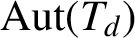 $\mathrm{Aut}(T_{d})$ is d for all $d\geq 2$.


ALTERNATING CIRCULAR SUMS OF BINOMIAL COEFFICIENTS
- Part of
-
- Journal:
- Bulletin of the Australian Mathematical Society / Volume 106 / Issue 3 / December 2022
- Published online by Cambridge University Press:
- 13 April 2022, pp. 385-395
- Print publication:
- December 2022
-
- Article
- Export citation
Local limit theorems in relatively hyperbolic groups II: the non-spectrally degenerate case
- Part of
-
- Journal:
- Compositio Mathematica / Volume 158 / Issue 4 / April 2022
- Published online by Cambridge University Press:
- 15 June 2022, pp. 764-830
- Print publication:
- April 2022
-
- Article
-
- You have access
- Open access
- HTML
- Export citation
-
This is the second of a series of two papers dealing with local limit theorems in relatively hyperbolic groups. In this second paper, we restrict our attention to non-spectrally degenerate random walks and we prove precise asymptotics of the probability $p_n(e,e)$ of going back to the origin at time $n$. We combine techniques adapted from thermodynamic formalism with the rough estimates of the Green function given by part I to show that $p_n(e,e)\sim CR^{-n}n^{-3/2}$, where $R$ is the inverse of the spectral radius of the random walk. This both generalizes results of Woess for free products and results of Gouëzel for hyperbolic groups.


A Laplace transform approach to direct and inverse problems for multi-compartment models
- Part of
-
- Journal:
- European Journal of Applied Mathematics / Volume 33 / Issue 6 / December 2022
- Published online by Cambridge University Press:
- 16 March 2022, pp. 1170-1184
-
- Article
- Export citation
A NEW CHARACTERISATION FOR QUARTIC RESIDUACITY OF $\mathbf {2}$
- Part of
-
- Journal:
- Bulletin of the Australian Mathematical Society / Volume 106 / Issue 1 / August 2022
- Published online by Cambridge University Press:
- 14 March 2022, pp. 1-6
- Print publication:
- August 2022
-
- Article
- Export citation
-
Let p be a prime with $p\equiv 1\pmod {4}$. Gauss first proved that $2$ is a quartic residue modulo p if and only if $p=x^2+64y^2$ for some $x,y\in \Bbb Z$ and various expressions for the quartic residue symbol $(\frac {2}{p})_4$ are known. We give a new characterisation via a permutation, the sign of which is determined by $(\frac {2}{p})_4$. The permutation is induced by the rule $x \mapsto y-x$ on the $(p-1)/4$ solutions $(x,y)$ to $x^2+y^2\equiv 0 \pmod {p}$ satisfying $1\leq x < y \leq (p-1)/2$.


ON THE DIVISIBILITY OF SUMS INVOLVING APÉRY-LIKE POLYNOMIALS
- Part of
-
- Journal:
- Bulletin of the Australian Mathematical Society / Volume 106 / Issue 2 / October 2022
- Published online by Cambridge University Press:
- 14 March 2022, pp. 203-208
- Print publication:
- October 2022
-
- Article
- Export citation
-
We prove a divisibility result on sums involving the Apéry-like polynomials
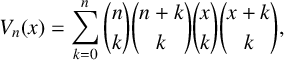 $$ \begin{align*} V_n(x)=\sum_{k=0}^n {n\choose k}{n+k\choose k}{x\choose k}{x+k\choose k}, \end{align*} $$
which confirms a conjectural congruence of Z.-H. Sun. Our proof relies on some combinatorial identities and transformation formulae.
Combinatorial and harmonic-analytic methods for integer tilings
- Part of
-
- Journal:
- Forum of Mathematics, Pi / Volume 10 / 2022
- Published online by Cambridge University Press:
- 09 March 2022, e8
-
- Article
-
- You have access
- Open access
- HTML
- Export citation
-
A finite set of integers A tiles the integers by translations if $\mathbb {Z}$ can be covered by pairwise disjoint translated copies of A. Restricting attention to one tiling period, we have $A\oplus B=\mathbb {Z}_M$ for some $M\in \mathbb {N}$ and $B\subset \mathbb {Z}$. This can also be stated in terms of cyclotomic divisibility of the mask polynomials $A(X)$ and $B(X)$ associated with A and B.
In this article, we introduce a new approach to a systematic study of such tilings. Our main new tools are the box product, multiscale cuboids and saturating sets, developed through a combination of harmonic-analytic and combinatorial methods. We provide new criteria for tiling and cyclotomic divisibility in terms of these concepts. As an application, we can determine whether a set A containing certain configurations can tile a cyclic group $\mathbb {Z}_M$, or recover a tiling set based on partial information about it. We also develop tiling reductions where a given tiling can be replaced by one or more tilings with a simpler structure. The tools introduced here are crucial in our proof in [24] that all tilings of period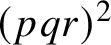 $(pqr)^2$, where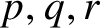 $p,q,r$ are distinct odd primes, satisfy a tiling condition proposed by Coven and Meyerowitz [2].


SOME EXTREMAL RESULTS ON THE CHROMATIC STABILITY INDEX
- Part of
-
- Journal:
- Bulletin of the Australian Mathematical Society / Volume 106 / Issue 2 / October 2022
- Published online by Cambridge University Press:
- 04 March 2022, pp. 185-194
- Print publication:
- October 2022
-
- Article
- Export citation
-
The $\chi $-stability index $\mathrm {es}_{\chi }(G)$ of a graph G is the minimum number of its edges whose removal results in a graph with chromatic number smaller than that of G. We consider three open problems from Akbari et al. [‘Nordhaus–Gaddum and other bounds for the chromatic edge-stability number’, European J. Combin. 84 (2020), Article no. 103042]. We show by examples that a known characterisation of k-regular ( $k\le 5$) graphs G with $\mathrm {es}_{\chi }(G) = 1$ does not extend to $k\ge 6$, and we characterise graphs G with $\chi (G)=3$ for which $\mathrm { es}_{\chi }(G)+\mathrm {es}_{\chi }(\overline {G}) = 2$. We derive necessary conditions on graphs G which attain a known upper bound on $\mathrm { es}_{\chi }(G)$ in terms of the order and the chromatic number of G and show that the conditions are sufficient when $n\equiv 2 \pmod 3$ and $\chi (G)=3$.


THEOREMS OF HYPERARITHMETIC ANALYSIS AND ALMOST THEOREMS OF HYPERARITHMETIC ANALYSIS
- Part of
-
- Journal:
- Bulletin of Symbolic Logic / Volume 28 / Issue 1 / March 2022
- Published online by Cambridge University Press:
- 31 March 2022, pp. 133-149
- Print publication:
- March 2022
-
- Article
-
- You have access
- Open access
- HTML
- Export citation
-
Theorems of hyperarithmetic analysis (THAs) occupy an unusual neighborhood in the realms of reverse mathematics and recursion-theoretic complexity. They lie above all the fixed (recursive) iterations of the Turing jump but below ATR $_{0}$ (and so $\Pi _{1}^{1}$-CA $_{0}$ or the hyperjump). There is a long history of proof-theoretic principles which are THAs. Until the papers reported on in this communication, there was only one mathematical example. Barnes, Goh, and Shore [1] analyze an array of ubiquity theorems in graph theory descended from Halin’s [9] work on rays in graphs. They seem to be typical applications of ACA $_{0}$ but are actually THAs. These results answer Question 30 of Montalbán’s Open Questions in Reverse Mathematics [19] and supply several other natural principles of different and unusual levels of complexity.
This work led in [25] to a new neighborhood of the reverse mathematical zoo: almost theorems of hyperarithmetic analysis (ATHAs). When combined with ACA $_{0}$ they are THAs but on their own are very weak. Denizens both mathematical and logical are provided. Generalizations of several conservativity classes ( $\Pi _{1}^{1}$, r- $\Pi _{1}^{1}$, and Tanaka) are defined and these ATHAs as well as many other principles are shown to be conservative over RCA $_{0}$ in all these senses and weak in other recursion-theoretic ways as well. These results answer a question raised by Hirschfeldt and reported in [19] by providing a long list of pairs of principles one of which is very weak over RCA $_{0}$ but over ACA $_{0}$ is equivalent to the other which may be strong (THA) or very strong going up a standard hierarchy and at the end being stronger than full second-order arithmetic.


Random stable-type minimal factorizations of the n-cycle
- Part of
-
- Journal:
- Advances in Applied Probability / Volume 54 / Issue 1 / March 2022
- Published online by Cambridge University Press:
- 24 February 2022, pp. 1-63
- Print publication:
- March 2022
-
- Article
- Export citation
-
We investigate random minimal factorizations of the n-cycle, that is, factorizations of the permutation $(1 \, 2 \cdots n)$ into a product of cycles $\tau_1, \ldots, \tau_k$ whose lengths $\ell(\tau_1), \ldots, \ell(\tau_k)$ satisfy the minimality condition $\sum_{i=1}^k(\ell(\tau_i)-1)=n-1$. By associating to a cycle of the factorization a black polygon inscribed in the unit disk, and reading the cycles one after another, we code a minimal factorization by a process of colored laminations of the disk. These new objects are compact subsets made of red noncrossing chords delimiting faces that are either black or white. Our main result is the convergence of this process as $n \rightarrow \infty$, when the factorization is randomly chosen according to Boltzmann weights in the domain of attraction of an $\alpha$-stable law, for some $\alpha \in (1,2]$. The limiting process interpolates between the unit circle and a colored version of Kortchemski’s $\alpha$-stable lamination. Our principal tool in the study of this process is a new bijection between minimal factorizations and a model of size-conditioned labeled random trees whose vertices are colored black or white, as well as the investigation of the asymptotic properties of these trees.


Packable hyperbolic surfaces with symmetries
- Part of
-
- Journal:
- Canadian Mathematical Bulletin / Volume 66 / Issue 1 / March 2023
- Published online by Cambridge University Press:
- 11 February 2022, pp. 103-113
- Print publication:
- March 2023
-
- Article
-
- You have access
- Open access
- HTML
- Export citation
Short proofs for long induced paths
- Part of
-
- Journal:
- Combinatorics, Probability and Computing / Volume 31 / Issue 5 / September 2022
- Published online by Cambridge University Press:
- 11 February 2022, pp. 870-878
-
- Article
-
- You have access
- Open access
- HTML
- Export citation
-
We present a modification of the Depth first search algorithm, suited for finding long induced paths. We use it to give simple proofs of the following results. We show that the induced size-Ramsey number of paths satisfies $\hat{R}_{\mathrm{ind}}(P_n)\leq 5 \cdot 10^7n$, thus giving an explicit constant in the linear bound, improving the previous bound with a large constant from a regularity lemma argument by Haxell, Kohayakawa and Łuczak. We also provide a bound for the k-colour version, showing that $\hat{R}_{\mathrm{ind}}^k(P_n)=O(k^3\log^4k)n$. Finally, we present a new short proof of the fact that the binomial random graph in the supercritical regime, $G(n,\frac{1+\varepsilon}{n})$, contains typically an induced path of length $\Theta(\varepsilon^2) n$.


Lee–Yang zeros and the complexity of the ferromagnetic Ising model on bounded-degree graphs
- Part of
-
- Journal:
- Forum of Mathematics, Sigma / Volume 10 / 2022
- Published online by Cambridge University Press:
- 07 February 2022, e7
-
- Article
-
- You have access
- Open access
- HTML
- Export citation
-
We study the computational complexity of approximating the partition function of the ferromagnetic Ising model with the external field parameter $\lambda $ on the unit circle in the complex plane. Complex-valued parameters for the Ising model are relevant for quantum circuit computations and phase transitions in statistical physics but have also been key in the recent deterministic approximation scheme for all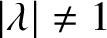 $|\lambda |\neq 1$ by Liu, Sinclair and Srivastava. Here, we focus on the unresolved complexity picture on the unit circle and on the tantalising question of what happens around $\lambda =1$, where, on one hand, the classical algorithm of Jerrum and Sinclair gives a randomised approximation scheme on the real axis suggesting tractability and, on the other hand, the presence of Lee–Yang zeros alludes to computational hardness. Our main result establishes a sharp computational transition at the point $\lambda =1$ and, more generally, on the entire unit circle. For an integer $\Delta \geq 3$ and edge interaction parameter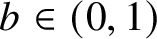 $b\in (0,1)$, we show $\mathsf {\#P}$-hardness for approximating the partition function on graphs of maximum degree $\Delta $ on the arc of the unit circle where the Lee–Yang zeros are dense. This result contrasts with known approximation algorithms when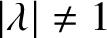 $|\lambda |\neq 1$ or when $\lambda $ is in the complementary arc around $1$ of the unit circle. Our work thus gives a direct connection between the presence/absence of Lee–Yang zeros and the tractability of efficiently approximating the partition function on bounded-degree graphs.


Proper Lie automorphisms of incidence algebras
- Part of
-
- Journal:
- Glasgow Mathematical Journal / Volume 64 / Issue 3 / September 2022
- Published online by Cambridge University Press:
- 07 February 2022, pp. 702-715
-
- Article
- Export citation
Derived categories of skew-gentle algebras and orbifolds
- Part of
-
- Journal:
- Glasgow Mathematical Journal / Volume 64 / Issue 3 / September 2022
- Published online by Cambridge University Press:
- 31 January 2022, pp. 649-674
-
- Article
-
- You have access
- Open access
- HTML
- Export citation
Prevalence of deficiency-zero reaction networks in an Erdös–Rényi framework
- Part of
-
- Journal:
- Journal of Applied Probability / Volume 59 / Issue 2 / June 2022
- Published online by Cambridge University Press:
- 28 January 2022, pp. 384-398
- Print publication:
- June 2022
-
- Article
- Export citation
-
Reaction networks are commonly used within the mathematical biology and mathematical chemistry communities to model the dynamics of interacting species. These models differ from the typical graphs found in random graph theory since their vertices are constructed from elementary building blocks, i.e. the species. We consider these networks in an Erdös–Rényi framework and, under suitable assumptions, derive a threshold function for the network to have a deficiency of zero, which is a property of great interest in the reaction network community. Specifically, if the number of species is denoted by n and the edge probability by $p_n$, then we prove that the probability of a random binary network being deficiency zero converges to 1 if $p_n\ll r(n)$ as $n \to \infty$, and converges to 0 if $p_n \gg r(n)$ as $n \to \infty$, where $r(n)=\frac{1}{n^3}$.


FINITE TWO-DISTANCE-TRANSITIVE DIHEDRANTS
- Part of
-
- Journal:
- Journal of the Australian Mathematical Society / Volume 113 / Issue 3 / December 2022
- Published online by Cambridge University Press:
- 26 January 2022, pp. 386-401
-
- Article
- Export citation
-
A noncomplete graph is $2$-distance-transitive if, for $i \in \{1,2\}$ and for any two vertex pairs $(u_1,v_1)$ and $(u_2,v_2)$ with the same distance i in the graph, there exists an element of the graph automorphism group that maps $(u_1,v_1)$ to $(u_2,v_2)$. This paper determines the family of $2$-distance-transitive Cayley graphs over dihedral groups, and it is shown that if the girth of such a graph is not $4$, then either it is a known $2$-arc-transitive graph or it is isomorphic to one of the following two graphs: $ {\mathrm {K}}_{x[y]}$, where $x\geq 3,y\geq 2$, and $G(2,p,({p-1})/{4})$, where p is a prime and $p \equiv 1 \ (\operatorname {mod}\, 8)$. Then, as an application of the above result, a complete classification is achieved of the family of $2$-geodesic-transitive Cayley graphs for dihedral groups.


Removal lemmas and approximate homomorphisms
- Part of
-
- Journal:
- Combinatorics, Probability and Computing / Volume 31 / Issue 4 / July 2022
- Published online by Cambridge University Press:
- 24 January 2022, pp. 721-736
-
- Article
-
- You have access
- Open access
- HTML
- Export citation
-
We study quantitative relationships between the triangle removal lemma and several of its variants. One such variant, which we call the triangle-free lemma, states that for each $\epsilon>0$ there exists M such that every triangle-free graph G has an $\epsilon$-approximate homomorphism to a triangle-free graph F on at most M vertices (here an $\epsilon$-approximate homomorphism is a map $V(G) \to V(F)$ where all but at most $\epsilon \left\lvert{V(G)}\right\rvert^2$ edges of G are mapped to edges of F). One consequence of our results is that the least possible M in the triangle-free lemma grows faster than exponential in any polynomial in $\epsilon^{-1}$. We also prove more general results for arbitrary graphs, as well as arithmetic analogues over finite fields, where the bounds are close to optimal.


