Refine listing
Actions for selected content:
374 results in 35Qxx
On the dynamics of a diffusive SEIRS epidemic model
- Part of
-
- Journal:
- European Journal of Applied Mathematics , First View
- Published online by Cambridge University Press:
- 13 April 2026, pp. 1-45
-
- Article
-
- You have access
- Open access
- HTML
- Export citation
-
This work investigates the dynamics of positive classical solutions to a diffusive susceptible-exposed-infected-recovered-susceptible epidemic model with a mass-action incidence mechanism in spatially heterogeneous environments. Under minimal assumptions on the initial data, the global existence of classical solutions is established. Moreover, the eventual boundedness of these solutions is proved when either the spatial domain has dimension five or lower or the susceptible and exposed subpopulations share the same diffusion rate. Next, we define the basic reproduction number, $\mathcal{R}_0$, and demonstrate that the disease-free equilibrium is globally stable when $\mathcal{R}_0$ is sufficiently small. However, due to the complex interaction between population movement and spatial variation in transmission rates, we find that the disease may persist even when $\mathcal{R}_0$ is slightly less than one. In such cases, we show that the system admits at least two endemic equilibrium (EE) solutions, an outcome not observed under the frequency-dependent incidence mechanism. These results highlight the significant influence of the transmission mechanism on disease dynamics. Furthermore, we examine the spatial profiles of the EE solutions when diffusion rates are small. Our analysis suggests that limiting the movement of the susceptible population can significantly reduce disease prevalence, provided that the total population remains below a specific threshold. In contrast, restricting the movement of the infected, exposed, or recovered populations alone may not eradicate the disease. Overall, our findings provide important insights into the spatial dynamics of infectious diseases and may offer guidance for developing and implementing effective containment strategies.


Genus two KdV soliton gases and their long-time asymptotics
- Part of
-
- Journal:
- Forum of Mathematics, Sigma / Volume 14 / 2026
- Published online by Cambridge University Press:
- 07 April 2026, e57
-
- Article
-
- You have access
- Open access
- HTML
- Export citation
-
This paper employs the Riemann-Hilbert problem and nonlinear steepest descent method of Deift-Zhou to provide a comprehensive analysis of the asymptotic behavior of the genus two Korteweg-de Vries soliton gases. It is demonstrated that the genus two soliton gas is related to the two-phase Riemann-Theta function as $x \to +\infty $, and approaches zero as $x \to -\infty $. Additionally, the long-time asymptotic behavior of this genus two soliton gas can be categorized into five distinct regions in the x-t plane, which from left to right are quiescent region, modulated one-phase wave, unmodulated one-phase wave, modulated two-phase wave, and unmodulated two-phase wave. Moreover, an innovative method is introduced to solve the model problem associated with the high-genus Riemann surface, leading to the determination of the leading terms, which is also related to the multiphase Riemann-Theta function. A general discussion on the case of arbitrary genus N soliton gas is also presented.


A note on the Maxwell’s eigenvalues on thin sets
- Part of
-
- Journal:
- Proceedings of the Royal Society of Edinburgh. Section A: Mathematics , First View
- Published online by Cambridge University Press:
- 31 March 2026, pp. 1-27
-
- Article
-
- You have access
- Open access
- HTML
- Export citation
-
We analyse the Maxwell’s spectrum on thin tubular neighbourhoods of embedded surfaces of $\mathbb R^3$. We show that the Maxwell’s eigenvalues converge to the Laplacian eigenvalues of the surface as the thin parameter tends to zero. To achieve this, we reformulate the problem in terms of the spectrum of the Hodge Laplacian with relative conditions acting on co-closed differential $1$-forms. The result leads to new examples of domains where the Faber–Krahn inequality for Maxwell’s eigenvalues fails, examples of domains with any number of arbitrarily small eigenvalues, and underlines the failure of spectral stability under singular perturbations changing the topology of the domain. Additionally, we explicitly produce Maxwell’s eigenfunctions on product domains with the product metric, extending previous constructions valid in the Euclidean case.


On the time-dependent Born–Oppenheimer approximation
- Part of
-
- Journal:
- European Journal of Applied Mathematics , First View
- Published online by Cambridge University Press:
- 04 March 2026, pp. 1-49
-
- Article
-
- You have access
- Open access
- HTML
- Export citation
Sharp local well-posedness for KP-I equations in the semilinear regime
- Part of
-
- Journal:
- Forum of Mathematics, Sigma / Volume 14 / 2026
- Published online by Cambridge University Press:
- 03 March 2026, e34
-
- Article
-
- You have access
- Open access
- HTML
- Export citation
-
We show sharp well-posedness with analytic data-to-solution mapping in the semilinear regime for dispersion-generalized KP-I equations on $\mathbb {R}^2$ and $\mathbb {R} \times \mathbb {T}$. On $\mathbb {R}^2$ we cover the full subcritical range, whereas on $\mathbb {R} \times \mathbb {T}$ the sharp well-posedness is strictly subcritical. We rely on linear and bilinear Strichartz estimates which are proved using decoupling techniques and square function estimates. Nonlinear Loomis-Whitney inequalities are a further ingredient. These are presently proved for Borel measures with growth condition reflecting the different geometries of the plane $\mathbb {R}^2$, the cylinder $\mathbb {R} \times \mathbb {T}$, and the torus $\mathbb {T}^2$. Finally, we point out that on tori $\mathbb {T}^2_\gamma $, KP-I equations are never semilinear.


MODELLING DYNAMIC STRAINS ON ICE SHELVES RESULTING FROM FLEXURAL AND EXTENSIONAL MOTIONS FORCED BY OCEAN WAVE PACKETS
- Part of
-
- Journal:
- The ANZIAM Journal / Volume 68 / 2026
- Published online by Cambridge University Press:
- 13 February 2026, e4
-
- Article
-
- You have access
- Open access
- HTML
- Export citation
Derivation of the Vlasov–Maxwell system from the Maxwell–Schrödinger equations with extended charges
- Part of
-
- Journal:
- Forum of Mathematics, Sigma / Volume 14 / 2026
- Published online by Cambridge University Press:
- 29 January 2026, e17
-
- Article
-
- You have access
- Open access
- HTML
- Export citation
A plethora of fully localized solitary waves for the full-dispersion Kadomtsev–Petviashvili equation
- Part of
-
- Journal:
- Journal of Nonlinear Waves / Volume 2 / 2026
- Published online by Cambridge University Press:
- 28 January 2026, e2
-
- Article
-
- You have access
- Open access
- HTML
- Export citation
-
The KP-I equation arises as a weakly nonlinear model equation for gravity-capillary waves with Bond number $\beta \gt 1/3$, also called strong surface tension. This equation has recently been shown to have a family of nondegenerate, symmetric ‘fully localized’ or ‘lump’ solitary waves which decay to zero in all spatial directions. The full-dispersion KP-I equation is obtained by retaining the exact dispersion relation in the modelling from the water-wave problem. In this paper, we show that the FDKP-I equation also has a family of symmetric fully localized solitary waves which are obtained by casting it as a perturbation of the KP-I equation and applying a suitable variant of the implicit-function theorem.

MULTIPLE SOLUTIONS FOR QUASILINEAR SCHRÖDINGER EQUATIONS WITH NONLINEARITY SUBLINEAR AT ZERO
- Part of
-
- Journal:
- Bulletin of the Australian Mathematical Society , First View
- Published online by Cambridge University Press:
- 26 January 2026, pp. 1-13
-
- Article
- Export citation
-
We consider quasilinear Schrödinger equations in $\mathbb {R}^N$ of the form $-\Delta u+V(x)u-u\Delta (u^2)=g(u)$, where the potential V is allowed to be sign-changing and the nonlinearity g is sublinear at zero. Except for being subcritical, no additional condition is imposed on $g(u)$ for $|u|$ large. We obtain a sequence of solutions with negative energy and converging to zero via Clark’s theorem. We also obtain a similar result for fourth-order quasilinear Schrödinger equations in $\mathbb {R}^N$ of the form $\Delta ^2u-\Delta u+ V(x)u-u\Delta (u^2)=g(u)$.


Nonlinear stability of extremal Reissner–Nordström black holes in spherical symmetry
- Part of
-
- Journal:
- Forum of Mathematics, Pi / Volume 14 / 2026
- Published online by Cambridge University Press:
- 14 January 2026, e3
-
- Article
-
- You have access
- Open access
- HTML
- Export citation
-
In this paper, we prove the codimension-one nonlinear asymptotic stability of the extremal Reissner–Nordström family of black holes in the spherically symmetric Einstein–Maxwell-neutral scalar field model, up to and including the event horizon. More precisely, we show that there exists a teleologically defined, codimension-one “submanifold” ${\mathfrak{M}}_{\mathrm{stab}}$ of the moduli space of spherically symmetric characteristic data for the Einstein–Maxwell-scalar field system lying close to the extremal Reissner–Nordström family, such that any data in ${\mathfrak{M}}_{\mathrm{stab}}$ evolve into a solution with the following properties as time goes to infinity: (i) the metric decays to a member of the extremal Reissner–Nordström family uniformly up to the event horizon, (ii) the scalar field decays to zero pointwise and in an appropriate energy norm, (iii) the first translation-invariant ingoing null derivative of the scalar field is approximately constant on the event horizon $\mathcal H^+$, (iv) for “generic” data, the second translation-invariant ingoing null derivative of the scalar field grows linearly along the event horizon. Due to the coupling of the scalar field to the geometry via the Einstein equations, suitable components of the Ricci tensor exhibit nondecay and growth phenomena along the event horizon. Points (i) and (ii) above reflect the “stability” of the extremal Reissner–Nordström family and points (iii) and (iv) verify the presence of the celebrated Aretakis instability [11] for the linear wave equation on extremal Reissner–Nordström black holes in the full nonlinear Einstein–Maxwell-scalar field model.


Ground states of the planar nonlinear Schrödinger–Newton system with a point interaction
- Part of
-
- Journal:
- Proceedings of the Royal Society of Edinburgh. Section A: Mathematics , First View
- Published online by Cambridge University Press:
- 12 January 2026, pp. 1-26
-
- Article
- Export citation
-
We establish sufficient conditions for the existence of ground states of the following normalized nonlinear Schrödinger–Newton system with a point interaction:
 \begin{equation*}\begin{cases}- \Delta_\alpha u + \omega u=w u+\beta u |u|^{p - 2}&\text{on} ~ \mathbb{R}^2;\\- \Delta w=2 \pi |u|^2&\text{on} ~ \mathbb{R}^2;\\\|u\|_{L^2}^2 = c,\end{cases}\end{equation*}
where $p \gt 2$;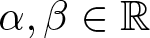 $\alpha, \beta \in \mathbb{R}$; $c \gt 0$ and $- \Delta_\alpha$ denotes the Laplacian of point interaction with s-wave scattering length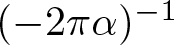 $(- 2 \pi \alpha)^{- 1}$, the unknowns being $u \colon \mathbb{R}^2 \to \mathbb{C}$, $w \colon \mathbb{R}^2 \to \lbrack0, \infty\lbrack$ and the Lagrange multiplier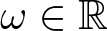 $\omega \in \mathbb{R}$. Additionally, we show that critical points of the corresponding constrained energy functional are naturally associated with standing waves of the evolution problem
 \begin{equation*}\mathrm{i} \psi' (t)=- \Delta_\alpha \psi (t)-(\log |\cdot| \ast |\psi (t)|^2)\psi (t)-\beta\psi (t)|\psi (t)|^{p - 2}.\end{equation*}


Normalized solutions of L2-supercritical NLS equations on non-compact metric graphs
- Part of
-
- Journal:
- Proceedings of the Royal Society of Edinburgh. Section A: Mathematics , First View
- Published online by Cambridge University Press:
- 11 December 2025, pp. 1-34
-
- Article
- Export citation
Linear damping estimates for periodic roll wave solutions of the inviscid Saint-Venant equations and related systems of hyperbolic balance laws
- Part of
-
- Journal:
- Journal of Nonlinear Waves / Volume 1 / 2025
- Published online by Cambridge University Press:
- 05 December 2025, e21
-
- Article
-
- You have access
- Open access
- HTML
- Export citation
-
Substantially extending previous results of the authors for smooth solutions in the viscous case, we develop linear damping estimates for periodic roll-wave solutions of the inviscid Saint-Venant equations and related systems of hyperbolic balance laws. Such damping estimates, consisting of $H^s$ energy estimates yielding exponential slaving of high-derivative to low-derivative norms, have served as crucial ingredients in nonlinear stability analyses of traveling waves in hyperbolic or partially parabolic systems, both in obtaining high-frequency resolvent estimates and in closing a nonlinear iteration for which available linearized stability estimates apparently lose regularity. Here, we establish for systems of size $n\leq 6$ a Lyapunov-type theorem stating that such energy estimates are available whenever strict high-frequency spectral stability holds; for dimensions $7$ and higher, there may be in general a gap between high-frequency spectral stability and existence of the type of energy estimate that we develop here. A key ingredient is a dimension-dependent linear algebraic lemma reminiscent of Lyapunov’s Lemma for ODE that is to our knowledge new.


Opinion dynamics with continuous age structure
- Part of
-
- Journal:
- European Journal of Applied Mathematics , First View
- Published online by Cambridge University Press:
- 04 December 2025, pp. 1-36
-
- Article
-
- You have access
- Open access
- HTML
- Export citation
General rogue waves of infinite order: exact properties, asymptotic behaviour, and effective numerical computation
- Part of
-
- Journal:
- Journal of Nonlinear Waves / Volume 1 / 2025
- Published online by Cambridge University Press:
- 13 November 2025, e19
-
- Article
-
- You have access
- Open access
- HTML
- Export citation
-
This paper is devoted to a comprehensive analysis of a family of solutions of the focusing nonlinear Schrödinger equation called general rogue waves of infinite order. These solutions have recently been shown to describe various limit processes involving large-amplitude waves, and they have also appeared in some physical models not directly connected with nonlinear Schrödinger equations. We establish the following key property of these solutions: they are all in $L^2(\mathbb{R})$ with respect to the spatial variable but they exhibit anomalously slow temporal decay. In this paper, we define general rogue waves of infinite order, establish their basic exact and asymptotic properties, and provide computational tools for calculating them accurately.

On a Cahn–Hilliard equation for the growth and division of chemically active droplets modelling protocells
- Part of
-
- Journal:
- European Journal of Applied Mathematics , First View
- Published online by Cambridge University Press:
- 06 November 2025, pp. 1-31
-
- Article
-
- You have access
- Open access
- HTML
- Export citation
Global solutions to 3D quadratic nonlinear Schrödinger-type equation
- Part of
-
- Journal:
- Forum of Mathematics, Sigma / Volume 13 / 2025
- Published online by Cambridge University Press:
- 05 November 2025, e183
-
- Article
-
- You have access
- Open access
- HTML
- Export citation
-
We consider the Cauchy problem to the 3D fractional Schrödinger equation with quadratic interaction of $u\bar u$ type. We prove the global existence of solutions and scattering properties for small initial data. For the proof, one novelty is that we combine the normal form methods and the space-time resonance methods. Using the normal form transform enables us to have more flexibility in designing the resolution spaces so that we can control various interactions. It is also convenient for the final data problem.

Pensive Billiards, Point Vortices, And The Silver Ratio
- Part of
-
- Journal:
- Forum of Mathematics, Sigma / Volume 13 / 2025
- Published online by Cambridge University Press:
- 13 October 2025, e171
-
- Article
-
- You have access
- Open access
- HTML
- Export citation
Quantitative quasi-invariance of Gaussian measures below the energy level for the 1D generalized nonlinear Schrödinger equation and application to global well-posedness
- Part of
-
- Journal:
- Proceedings of the Royal Society of Edinburgh. Section A: Mathematics , First View
- Published online by Cambridge University Press:
- 08 October 2025, pp. 1-33
-
- Article
-
- You have access
- Open access
- HTML
- Export citation
-
We consider the Schrödinger equation on the one dimensional torus with a general odd-power nonlinearity $p \geq 5$, which is known to be globally well-posed in the Sobolev space $H^\sigma(\mathbb{T})$, for every $\sigma \geq 1$, thanks to the conservation and finiteness of the energy. For regularities σ < 1, where this energy is infinite, we explore a globalization argument adapted to random initial data distributed according to the Gaussian measures µs, with covariance operator $(1-\Delta)^s$, for s in a range $(s_p,\frac{3}{2}]$. We combine a deterministic local Cauchy theory with the quasi-invariance of Gaussian measures µs, with additional Lq-bounds on the Radon-Nikodym derivatives, to prove that the Gaussian initial data generate almost surely global solutions. These Lq-bounds are obtained with respect to Gaussian measures accompanied by a cutoff on a renormalization of the energy; the main tools to prove them are the Boué-Dupuis variational formula and a Poincaré-Dulac normal form reduction. This approach is similar in spirit to Bourgain’s invariant argument [7] and to arecent work by Forlano-Tolomeo in [18].


Global smooth solutions and singularity formation for the relativistic Euler equations with radial symmetry
- Part of
-
- Journal:
- Canadian Journal of Mathematics , First View
- Published online by Cambridge University Press:
- 03 October 2025, pp. 1-32
-
- Article
- Export citation
