Refine listing
Actions for selected content:
152916 results in Open Access
The Visible Hand on the Land: Agricultural Planning in the United States and Switzerland in the Interwar Years
-
- Journal:
- Contemporary European History / Volume 35 / 2026
- Published online by Cambridge University Press:
- 06 July 2026, e83
-
- Article
-
- You have access
- Open access
- HTML
- Export citation
Allowed by Right, Forbidden by Ethics: Kant on ‘Unpurposive’ Sex
-
- Journal:
- Kantian Review , First View
- Published online by Cambridge University Press:
- 06 July 2026, pp. 1-18
-
- Article
-
- You have access
- Open access
- HTML
- Export citation
Locally Global: Entextualizations of the K- Morpheme in Contemporary Korean Popular Culture
-
- Journal:
- Signs and Society / Volume 14 / Issue 2 / June 2026
- Published online by Cambridge University Press:
- 06 July 2026, pp. 211-227
-
- Article
-
- You have access
- Open access
- HTML
- Export citation
Showcase Festivals and Music Export Organisations: An Ambivalent Ecosystem of International Access, Networking and Exposure
-
- Journal:
- Popular Music , First View
- Published online by Cambridge University Press:
- 06 July 2026, pp. 1-24
-
- Article
-
- You have access
- Open access
- HTML
- Export citation
Rapid diagnostic assay distinguishing the snail vectors Bulinus globosus and Bulinus nasutus for urogenital schistosomiasis transmission risk mapping in East Africa
-
- Journal:
- Parasitology / Accepted manuscript
- Published online by Cambridge University Press:
- 06 July 2026, pp. 1-32
-
- Article
-
- You have access
- Open access
- Export citation
ProDebug: An Automated Debugging System for Prolog
-
- Journal:
- Theory and Practice of Logic Programming , First View
- Published online by Cambridge University Press:
- 06 July 2026, pp. 1-16
-
- Article
-
- You have access
- Open access
- HTML
- Export citation
The Force and the Place of Provisional Property in Kant’s Doctrine of Right
-
- Journal:
- Kantian Review , First View
- Published online by Cambridge University Press:
- 06 July 2026, pp. 1-21
-
- Article
-
- You have access
- Open access
- HTML
- Export citation
Explainable machine learning highlights the role of diffuse radiation in ecosystem carbon uptake of boreal forest
-
- Journal:
- Environmental Data Science / Volume 5 / 2026
- Published online by Cambridge University Press:
- 06 July 2026, e15
-
- Article
-
- You have access
- Open access
- HTML
- Export citation
-
Boreal forests play a critical role in the global carbon cycle as they are one of the largest terrestrial carbon sinks globally. In this study, we employ explainable machine learning (ML) techniques to investigate the influence of environmental and vegetation variables on net ecosystem exchange (NEE), focusing specifically on the effects of diffuse radiation. We utilize a sub-hourly resolution data set including satellite and in-situ observations from three boreal or hemiboreal forest research stations across the latitudes 58–68° N to capture latitudinal variability in forest carbon uptake. Using SHAP (Shapley Additive Explanations) values, we identify key drivers influencing NEE and quantify their importance across various ML model architectures. Photosynthetically active radiation (PAR), diffuse radiation, normalized difference vegetation index, and soil temperature were identified as the variables having the largest explanatory power for NEE across the ML models. ML models using only these variables result in $ {R}^2\approx 0.8 $
 and RMSE$ \approx 2.3 $ $ \mu \mathrm{mol}\;{\mathrm{m}}^{-2}\hskip0.1em {\mathrm{s}}^{-1} $
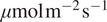 . Further analysis of SHAP values indicates that higher diffuse radiation (DiffPAR) is associated with more negative NEE (stronger carbon sink). SHAP analysis highlights this effect much more clearly than raw DiffPAR measurements, because it accounts for interactions with other environmental factors. This suggests that the diffuse radiation effect emerges from interactions between DiffPAR and co-varying environmental factors (such as cloudiness and total PAR). Cases identified by SHAP ($ \mathrm{DiffPAR}\ \mathrm{SHAP}<-2 $
 ) have a median NEE $ 1.55\mu \mathrm{mol},{\mathrm{m}}^{-2},{\mathrm{s}}^{-1} $
 more negative than cases with raw $ \mathrm{DiffPAR}\ge 400 $
 . When applied to ML models, SHAP uncovers nonlinear, context-dependent interactions between diffuse radiation and other drivers of NEE without assuming a priori relationships.


Validation of an ICD-10-based algorithm for identifying inappropriate antibiotic prescribing for pediatric outpatients
-
- Journal:
- Infection Control & Hospital Epidemiology , First View
- Published online by Cambridge University Press:
- 06 July 2026, pp. 1-7
-
- Article
-
- You have access
- Open access
- HTML
- Export citation
Impact of copper-coated surfaces on healthcare-associated infections and microbial load in a pediatric tertiary care setting: an observational cohort study
-
- Journal:
- Infection Control & Hospital Epidemiology , First View
- Published online by Cambridge University Press:
- 06 July 2026, pp. 1-7
-
- Article
-
- You have access
- Open access
- HTML
- Export citation
Spanning clique subdivisions in pseudorandom graphs
- Part of
-
- Journal:
- Combinatorics, Probability and Computing , First View
- Published online by Cambridge University Press:
- 06 July 2026, pp. 1-15
-
- Article
-
- You have access
- Open access
- HTML
- Export citation
-
In this paper, we study the appearance of a spanning subdivision of a clique in graphs satisfying certain pseudorandom conditions. Specifically, we show the following results.
(i) There are constants $C\gt 0$ and $c\in (0,1]$ such that, whenever $d/\lambda \ge C$, every $(n,d,\lambda )$-graph contains a spanning subdivision of $K_t$ for all $2\le t \le \min \{cd,c\sqrt {\frac {n}{\log n}}\}$.
(ii) There are constants $C\gt 0$ and $c\in (0,1]$ such that, whenever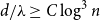 $d/\lambda \ge C\log ^3n$, every $(n,d,\lambda )$-graph contains a spanning nearly balanced subdivision of $K_t$ for all $2\le t \le \min \{cd,c\sqrt {\frac {n}{\log ^3n}}\}$.
(iii) For every $\mu \gt 0$, there are constants $c,\varepsilon \in (0,1]$ and $n_0\in \mathbb N$ such that, whenever $n\ge n_0$, every $n$-vertex graph with minimum degree at least $\mu n$ and no bipartite holes of size $\varepsilon n$ contains a spanning nearly balanced subdivision of $K_t$ for all $2\le t \le c\sqrt {n}$.


The impact of patient death and suicide on mental health professionals: mixed-methods study
-
- Journal:
- BJPsych Open / Volume 12 / Issue 4 / July 2026
- Published online by Cambridge University Press:
- 06 July 2026, e178
-
- Article
-
- You have access
- Open access
- HTML
- Export citation
Replicable subcortical alterations linked to neurological soft signs in schizophrenia spectrum disorders
-
- Journal:
- Psychological Medicine / Volume 56 / 2026
- Published online by Cambridge University Press:
- 06 July 2026, e212
-
- Article
-
- You have access
- Open access
- HTML
- Export citation
A Transdisciplinary Systems-Level Approach to Maternal Health: Developing a Research Center of Excellence
-
- Journal:
- Journal of Clinical and Translational Science / Accepted manuscript
- Published online by Cambridge University Press:
- 06 July 2026, pp. 1-19
-
- Article
-
- You have access
- Open access
- Export citation
A four-factor model of psychopathy assessed via neural reinforcement sensitivity theory
-
- Journal:
- Personality Neuroscience / Volume 9 / 2026
- Published online by Cambridge University Press:
- 06 July 2026, e4
-
- Article
-
- You have access
- Open access
- HTML
- Export citation
Standpoint Theory and Peer Disagreement within a Community Model of Knowledge
-
- Journal:
- Episteme , First View
- Published online by Cambridge University Press:
- 06 July 2026, pp. 1-18
-
- Article
-
- You have access
- Open access
- HTML
- Export citation
On the local convergence of integer-valued Lipschitz functions on regular trees
-
- Journal:
- Combinatorics, Probability and Computing , First View
- Published online by Cambridge University Press:
- 06 July 2026, pp. 1-33
-
- Article
-
- You have access
- Open access
- HTML
- Export citation
-
We study random integer-valued Lipschitz functions on regular trees. It was shown by Peled, Samotij, and Yehudayoff [22] that such functions are localized; however, finer questions about the structure of Gibbs measures remain unanswered. Our main result is that the weak limit of a uniformly chosen 1-Lipschitz function with 0 boundary condition on a $d$-ary tree of height $n$ exists as $n \to \infty$ if $2 \le d \le 7$, but not if $d \ge 8$, thereby partially answering a question posed by Peled, Samotij and Yehudayoff. For large $d$, the value at the root alternates between being almost entirely concentrated on 0 for even $n$ and being roughly uniform on $\{-1,0,1\}$ for odd $n$, leading to different limits as $n$ approaches infinity along evens or odds. For $d \ge 8$, the essence of this phenomenon is preserved, which obstructs the convergence. For $d \le 7$, this phenomenon ceases to exist, and the law of the value at the root loses its connection with the parity of $n$. Along the way, we also obtain an alternative proof of localization. The key idea is a fixed point convergence result for a related operator on $\ell ^\infty$ and a procedure to show that the iterations get into a ‘basin of attraction’ of the fixed point. We also prove some accompanying analogous ‘even-odd phenomenon’ type results about $M$-Lipschitz functions on general non-amenable graphs with high enough expansion (this includes for example the large $d$ case for regular trees). We also prove a convergence result for 1-Lipschitz functions with $\{0,1\}$ boundary condition. This last result relies on an absolute value FKG for uniform 1-Lipschitz functions when shifted by $1/2$.


Universities as Laboratories of Democratic Action
-
- Journal:
- Perspectives on Politics , First View
- Published online by Cambridge University Press:
- 06 July 2026, pp. 1-15
-
- Article
-
- You have access
- Open access
- HTML
- Export citation
Affordances-in-practice and misogynistic discourse: A post-digital discourse analysis of memetic verbal aggression in Hong Kong
-
- Journal:
- Annual Review of Applied Linguistics , First View
- Published online by Cambridge University Press:
- 06 July 2026, pp. 1-24
-
- Article
-
- You have access
- Open access
- HTML
- Export citation
Narratives of Democracy and Despotism: Richard Hildreth and the Politics of American History
-
- Journal:
- Modern Intellectual History , First View
- Published online by Cambridge University Press:
- 06 July 2026, pp. 1-26
-
- Article
-
- You have access
- Open access
- HTML
- Export citation
