Internet Explorer 11 is being discontinued by Microsoft in August 2021.
If you have difficulties viewing the site on Internet Explorer 11 we
recommend using a different browser such as Microsoft Edge, Google
Chrome, Apple Safari or Mozilla Firefox.
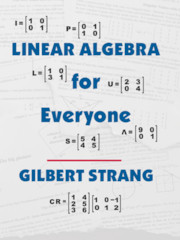
Linear algebra has become the subject to know for people in quantitative disciplines of all kinds. No longer the exclusive domain of mathematicians and engineers, it is now used everywhere there is data and everybody who works with data needs to know more. This new book from Professor Gilbert Strang, author of the acclaimed Introduction to Linear Algebra, now in its fifth edition, makes linear algebra accessible to everybody, not just those with a strong background in mathematics. It takes a more active start, beginning by finding independent columns of small matrices, leading to the key concepts of linear combinations and rank and column space. From there it passes on to the classical topics of solving linear equations, orthogonality, linear transformations and subspaces, all clearly explained with many examples and exercises. The last major topics are eigenvalues and the important singular value decomposition, illustrated with applications to differential equations and image compression. A final optional chapter explores the ideas behind deep learning.
Linear algebra has become the subject to know for people in quantitative disciplines of all kinds. No longer the exclusive domain of mathematicians and engineers, it is now used everywhere there is data and everybody who works with data needs to know more. This new book from Professor Gilbert Strang, author of the acclaimed Introduction to Linear Algebra, now in its fifth edition, makes linear algebra accessible to everybody, not just those with a strong background in mathematics. It takes a more active start, beginning by finding independent columns of small matrices, leading to the key concepts of linear combinations and rank and column space. From there it passes on to the classical topics of solving linear equations, orthogonality, linear transformations and subspaces, all clearly explained with many examples and exercises. The last major topics are eigenvalues and the important singular value decomposition, illustrated with applications to differential equations and image compression. A final optional chapter explores the ideas behind deep learning.
Introducing the kinetics of phase transformations, in a manner that is relevant to all materials, from polymers and ceramics to metals and electronic materials. It builds up from simple discussions of interfaces to the complex primary phase transformations used to create engineering materials, and introduces students to real-world industry tools, including materials databases and CALPHAD-based codes. All assumptions are clearly stated, and all derivations presented in full, allowing students to focus on core concepts and the implications of results, and it is accompanied by 125 end-of-chapter homework problems, Python code examples, and solutions for instructors. Culminating with a discussion of transformation rates that synthesizes concepts presented throughout the text, including three example capstone projects, this is the ideal introduction for senior undergraduate and graduate students studying phase transformations.
Introducing the kinetics of phase transformations, in a manner that is relevant to all materials, from polymers and ceramics to metals and electronic materials. It builds up from simple discussions of interfaces to the complex primary phase transformations used to create engineering materials, and introduces students to real-world industry tools, including materials databases and CALPHAD-based codes. All assumptions are clearly stated, and all derivations presented in full, allowing students to focus on core concepts and the implications of results, and it is accompanied by 125 end-of-chapter homework problems, Python code examples, and solutions for instructors. Culminating with a discussion of transformation rates that synthesizes concepts presented throughout the text, including three example capstone projects, this is the ideal introduction for senior undergraduate and graduate students studying phase transformations.
Older than the pyramids, Sumerian was used in ancient Mesopotamia (Southern Iraq). It is probably the world's first written language, and survives on clay tablets in the cuneiform script, dating from c.3000 BCE to the beginning of the Common Era. It abounds in simple inscriptions, ideal for beginners, but also boasts a wealth of more advanced writings, such as fascinating mythological poetry. This comprehensive textbook equips students to read the full range of texts – including the special variety of the language known as Emesal. Drawing on the authors' experience in the classroom, it uses intuitive terminology and also makes extensive use of diagrams, which unravel the language's structures in an easy-to-learn way. The examples and readings are all taken from original sources. The learning journey is further supported by exercises (with key), a full sign list and glossary, and online recordings with 'approximate pronunciations'.
Older than the pyramids, Sumerian was used in ancient Mesopotamia (Southern Iraq). It is probably the world's first written language, and survives on clay tablets in the cuneiform script, dating from c.3000 BCE to the beginning of the Common Era. It abounds in simple inscriptions, ideal for beginners, but also boasts a wealth of more advanced writings, such as fascinating mythological poetry. This comprehensive textbook equips students to read the full range of texts – including the special variety of the language known as Emesal. Drawing on the authors' experience in the classroom, it uses intuitive terminology and also makes extensive use of diagrams, which unravel the language's structures in an easy-to-learn way. The examples and readings are all taken from original sources. The learning journey is further supported by exercises (with key), a full sign list and glossary, and online recordings with 'approximate pronunciations'.
Throughout the greater Mediterranean world, the remains of Roman monuments can be found in cities and rural areas, displaying the range of architectural imagination and engineering prowess of the Roman Empire. This volume offers a comprehensive overview of architecture throughout the Roman realm. Providing historical context as it relates to key monuments, Fikret Yegül and Diane Favro explore Roman building construction and technology and emphasize how much the Roman architectural tradition owes to the achievements and traditions of indigenous peoples across three continents, leading to an insightful understanding of the concept of 'Romanization.' They also examine architecture in rural environments and buildings for all social classes and genders, while investigating how events and policies, as well as available technologies and materials, shaped design and the built environment. Clearly written and richly illustrated with over 400 images, this book offers a multi-dimensional overview of the Roman built environment and its unique architectural vision and perspective.
Throughout the greater Mediterranean world, the remains of Roman monuments can be found in cities and rural areas, displaying the range of architectural imagination and engineering prowess of the Roman Empire. This volume offers a comprehensive overview of architecture throughout the Roman realm. Providing historical context as it relates to key monuments, Fikret Yegül and Diane Favro explore Roman building construction and technology and emphasize how much the Roman architectural tradition owes to the achievements and traditions of indigenous peoples across three continents, leading to an insightful understanding of the concept of 'Romanization.' They also examine architecture in rural environments and buildings for all social classes and genders, while investigating how events and policies, as well as available technologies and materials, shaped design and the built environment. Clearly written and richly illustrated with over 400 images, this book offers a multi-dimensional overview of the Roman built environment and its unique architectural vision and perspective.
While intergroup relations research has expanded globally, few resources offer a comprehensive grounding in its major theories. This book bridges that gap by providing critical assessments of the major theories of intergroup relations, their applied implications, and the empirical research that tests them. It traces the development of the field by examining major theories of intergroup behavior – from identity-based, materialist, and irrationalist perspectives to theories centered on justice, conflict, evolution, and system justification – and also critically assesses assimilation, multiculturalism, omniculturalism, and intergroup contact. The book concludes by showing how integrating existing theories with feminist frameworks, allyship, and intersectionality can help build more powerful and coherent models for understanding intergroup relations. By systematically analyzing these approaches and their practical applications, Theories of Intergroup Relations deepens our understanding of intergroup dynamics and supports the development of strategies for fostering more harmonious relations among diverse groups.
While intergroup relations research has expanded globally, few resources offer a comprehensive grounding in its major theories. This book bridges that gap by providing critical assessments of the major theories of intergroup relations, their applied implications, and the empirical research that tests them. It traces the development of the field by examining major theories of intergroup behavior – from identity-based, materialist, and irrationalist perspectives to theories centered on justice, conflict, evolution, and system justification – and also critically assesses assimilation, multiculturalism, omniculturalism, and intergroup contact. The book concludes by showing how integrating existing theories with feminist frameworks, allyship, and intersectionality can help build more powerful and coherent models for understanding intergroup relations. By systematically analyzing these approaches and their practical applications, Theories of Intergroup Relations deepens our understanding of intergroup dynamics and supports the development of strategies for fostering more harmonious relations among diverse groups.
This book, which draws on Lisa Bendall's lectures over three decades, provides an engaging and accessible survey of everything students need to know to read and understand texts in Linear B. As John Chadwick noted, the Linear B scholar must be 'not just an epigraphist, not just a linguist, not just an economic historian and archaeologist; ideally he or she…must be all these things simultaneously'. Volume 1 introduces the student to the writing system and the language, especially the phonology and morphology. It also explains the formal aspects of the documents and gives guidance on the tools available to the student and scholar. Volume 2 will provide a guide to using the documents to understand the Mycenaean world.
This book, which draws on Lisa Bendall's lectures over three decades, provides an engaging and accessible survey of everything students need to know to read and understand texts in Linear B. As John Chadwick noted, the Linear B scholar must be 'not just an epigraphist, not just a linguist, not just an economic historian and archaeologist; ideally he or she…must be all these things simultaneously'. Volume 1 introduces the student to the writing system and the language, especially the phonology and morphology. It also explains the formal aspects of the documents and gives guidance on the tools available to the student and scholar. Volume 2 will provide a guide to using the documents to understand the Mycenaean world.
Inclusion is about recognising the rights of every person and ensuring that equitable opportunities exist for all. Inclusive Practice in the Early Years provides pre-service and in-service early childhood teachers and educators with theoretical guidance and practical strategies to allow all children to participate meaningfully in learning. Inclusive Practice in the Early Years focuses on the inclusion of children with disability, developmental delay and neurodivergence from birth to five years. The book also highlights the importance of recognising inclusive principles that apply to a wider range of diversity including Aboriginal and Torres Strait Islander children, refugee and migrant children, children who have experienced trauma and families experiencing disadvantage. Developed by authors with extensive experience across early childhood education, disability, community, and allied health, this text provides valuable information and strategies to support both pre-service and in-service teachers and practitioners to develop an inclusive practice.
Inclusion is about recognising the rights of every person and ensuring that equitable opportunities exist for all. Inclusive Practice in the Early Years provides pre-service and in-service early childhood teachers and educators with theoretical guidance and practical strategies to allow all children to participate meaningfully in learning. Inclusive Practice in the Early Years focuses on the inclusion of children with disability, developmental delay and neurodivergence from birth to five years. The book also highlights the importance of recognising inclusive principles that apply to a wider range of diversity including Aboriginal and Torres Strait Islander children, refugee and migrant children, children who have experienced trauma and families experiencing disadvantage. Developed by authors with extensive experience across early childhood education, disability, community, and allied health, this text provides valuable information and strategies to support both pre-service and in-service teachers and practitioners to develop an inclusive practice.
A thorough introduction to formal syntactic typology by a leader in the field, Comparing Syntax systematically covers syntactic variation across languages. The textbook covers word-order parameters, null subjects, polysynthesis, verb-movement, ergativity, interrogatives and negation within a comparative framework, ensuring that readers are able to engage with the key topics in the most up-to-date primary research literature. The comprehensive glossary, end-of-chapter exercises and annotated further reading lists allow readers to consolidate and extend their knowledge as they progress through the book. A self-contained work ideal for intermediate and advanced-level students, Comparing Syntax also builds on the author's Beginning Syntax and Continuing Syntax.
A thorough introduction to formal syntactic typology by a leader in the field, Comparing Syntax systematically covers syntactic variation across languages. The textbook covers word-order parameters, null subjects, polysynthesis, verb-movement, ergativity, interrogatives and negation within a comparative framework, ensuring that readers are able to engage with the key topics in the most up-to-date primary research literature. The comprehensive glossary, end-of-chapter exercises and annotated further reading lists allow readers to consolidate and extend their knowledge as they progress through the book. A self-contained work ideal for intermediate and advanced-level students, Comparing Syntax also builds on the author's Beginning Syntax and Continuing Syntax.
This textbook focuses on general topology. Meant for graduate and senior undergraduate mathematics students, it introduces topology thoroughly from scratch and assumes minimal basic knowledge of real analysis and metric spaces. It begins with thought-provoking questions to encourage students to learn about topology and how it is related to, yet different from, geometry. Using concepts from real analysis and metric spaces, the definition of topology is introduced along with its motivation and importance. The text covers all the topics of topology, including homeomorphism, subspace topology, weak topology, product topology, quotient topology, coproduct topology, order topology, metric topology, and topological properties such as countability axioms, separation axioms, compactness, and connectedness. It also helps to understand the significance of various topological properties in classifying topological spaces.
This textbook focuses on general topology. Meant for graduate and senior undergraduate mathematics students, it introduces topology thoroughly from scratch and assumes minimal basic knowledge of real analysis and metric spaces. It begins with thought-provoking questions to encourage students to learn about topology and how it is related to, yet different from, geometry. Using concepts from real analysis and metric spaces, the definition of topology is introduced along with its motivation and importance. The text covers all the topics of topology, including homeomorphism, subspace topology, weak topology, product topology, quotient topology, coproduct topology, order topology, metric topology, and topological properties such as countability axioms, separation axioms, compactness, and connectedness. It also helps to understand the significance of various topological properties in classifying topological spaces.
This book provides a clear and accessible introduction to ring theory for undergraduate students. Aligned with standard curricula, it simplifies abstract concepts through structured explanations, practical examples, and real-world applications. Ideal for both students and instructors, it serves as a valuable resource for mastering fundamental concepts in ring theory with ease. The text begins with an introduction to rings and goes on to cover subrings, integral domains, ideals, and factor rings. It also discusses ring homomorphisms and polynomial rings. The book concludes with topics such as polynomial factorization and divisibility in integral domains. Each chapter is supplemented with solved examples to foster a deeper understanding of the subject. A set of practice questions is also provided to sharpen problem-solving skills.
This book provides a clear and accessible introduction to ring theory for undergraduate students. Aligned with standard curricula, it simplifies abstract concepts through structured explanations, practical examples, and real-world applications. Ideal for both students and instructors, it serves as a valuable resource for mastering fundamental concepts in ring theory with ease. The text begins with an introduction to rings and goes on to cover subrings, integral domains, ideals, and factor rings. It also discusses ring homomorphisms and polynomial rings. The book concludes with topics such as polynomial factorization and divisibility in integral domains. Each chapter is supplemented with solved examples to foster a deeper understanding of the subject. A set of practice questions is also provided to sharpen problem-solving skills.
The field of materials management has its own significance in the industrial and business environment. This incorporates procurement as well as production of items. In this context, certain factors play very important role. A detailed understanding of these factors is necessary for knowing the implications pertaining to their variation among other issues. This book on Materials Management covers a good understanding of relevant conceptual topics and various parameters involved in the analysis of inventory situations. Several numericals, practical examples and cases are explained, considering relevant situation along with the different industrial and managerial aspects, making it a useful resource for students as well as instructors. It will also be helpful in generating various projects in engineering and allied management areas.
The field of materials management has its own significance in the industrial and business environment. This incorporates procurement as well as production of items. In this context, certain factors play very important role. A detailed understanding of these factors is necessary for knowing the implications pertaining to their variation among other issues. This book on Materials Management covers a good understanding of relevant conceptual topics and various parameters involved in the analysis of inventory situations. Several numericals, practical examples and cases are explained, considering relevant situation along with the different industrial and managerial aspects, making it a useful resource for students as well as instructors. It will also be helpful in generating various projects in engineering and allied management areas.
Reading Biblical Greek is aimed at students who are studying New Testament Greek for the first time, or refreshing what they once learned. Designed to supplement and reinforce The Elements of New Testament Greek, by Jeremy Duff, each chapter of this textbook provides lengthy, plot-driven texts that will be accessible as students study each chapter of The Elements. Each text is accompanied by detailed questions, which test comprehension of content from recent lessons and review challenging topics from previous chapters. The graded nature of the texts, together with the copious notes and comprehension questions, makes this an ideal resource for learning, reviewing or re-entering Greek. The focus of this resource is on reading with understanding, and the exercises highlight how Greek texts convey meaning. Finally, this book moves on from first-year Greek, with sections that cover the most important advanced topics thoroughly.
Reading Biblical Greek is aimed at students who are studying New Testament Greek for the first time, or refreshing what they once learned. Designed to supplement and reinforce The Elements of New Testament Greek, by Jeremy Duff, each chapter of this textbook provides lengthy, plot-driven texts that will be accessible as students study each chapter of The Elements. Each text is accompanied by detailed questions, which test comprehension of content from recent lessons and review challenging topics from previous chapters. The graded nature of the texts, together with the copious notes and comprehension questions, makes this an ideal resource for learning, reviewing or re-entering Greek. The focus of this resource is on reading with understanding, and the exercises highlight how Greek texts convey meaning. Finally, this book moves on from first-year Greek, with sections that cover the most important advanced topics thoroughly.
This undergraduate biological psychology textbook offers a critical introduction to brain and behavior. Psychology lectures open with 'the brain is the most complex and mysterious object in the universe', only to quickly reduce that complexity by teaching simplified models. This textbook challenges these narratives by focusing on the latest neurotechnological advances, to clarify the limits of current models, and to inspire the development of safe and accessible technologies for human use. Its central aim is to promote critical thinking and inspire students to pose novel research questions that build from current advances. It is an ideal textbook for instructors who are eager to push beyond a conventional introductory curriculum. Beautifully illustrated and full of practical applications, it is accompanied by teaching slides and a test bank.
This undergraduate biological psychology textbook offers a critical introduction to brain and behavior. Psychology lectures open with 'the brain is the most complex and mysterious object in the universe', only to quickly reduce that complexity by teaching simplified models. This textbook challenges these narratives by focusing on the latest neurotechnological advances, to clarify the limits of current models, and to inspire the development of safe and accessible technologies for human use. Its central aim is to promote critical thinking and inspire students to pose novel research questions that build from current advances. It is an ideal textbook for instructors who are eager to push beyond a conventional introductory curriculum. Beautifully illustrated and full of practical applications, it is accompanied by teaching slides and a test bank.
This innovative textbook has been designed with approachability and engagement at its forefront, using language reminiscent of a live lecture and interspersing the main text with useful advice and expansions. Striking a balance between theoretical- and experimental-led approaches, this book immediately immerses the reader in charge and neutral currents, which are at the core of the Standard Model, before presenting the gauge field, allowing the introduction of Feynman diagram calculations at an early stage. This novel and effective approach gives readers a head start in understanding the Model's predictions, stoking interest early on. With in-chapter problem sessions which help readers to build their mastery of the subject, clarifying notes on equations, end of chapter exercises to consolidate learning, and marginal comments to guide readers through the complexities of the Standard Model, this is the ideal book for graduate students studying high energy physics.
This innovative textbook has been designed with approachability and engagement at its forefront, using language reminiscent of a live lecture and interspersing the main text with useful advice and expansions. Striking a balance between theoretical- and experimental-led approaches, this book immediately immerses the reader in charge and neutral currents, which are at the core of the Standard Model, before presenting the gauge field, allowing the introduction of Feynman diagram calculations at an early stage. This novel and effective approach gives readers a head start in understanding the Model's predictions, stoking interest early on. With in-chapter problem sessions which help readers to build their mastery of the subject, clarifying notes on equations, end of chapter exercises to consolidate learning, and marginal comments to guide readers through the complexities of the Standard Model, this is the ideal book for graduate students studying high energy physics.
Historical Sociolinguistics is the study of the relationship between language and society in its historical dimension. This is the first textbook to introduce this vibrant field, based on examples and case studies taken from a variety of languages. Chapters begin with clear explanations of core concepts, which are then applied to historical contexts from different languages, such as English, French, Hindi and Mandarin. The volume uses several pedagogical methods, allowing readers to gain a deeper understanding of the theory and of examples. A list of key terms is provided, covering the main theoretical and methodological issues discussed. The book also includes a range of exercises and short further reading sections for students. It is ideal for students of sociolinguistics and historical linguistics, as well as providing a basic introduction to historical sociolinguistics for anyone with an interest in linguistics or social history.
Historical Sociolinguistics is the study of the relationship between language and society in its historical dimension. This is the first textbook to introduce this vibrant field, based on examples and case studies taken from a variety of languages. Chapters begin with clear explanations of core concepts, which are then applied to historical contexts from different languages, such as English, French, Hindi and Mandarin. The volume uses several pedagogical methods, allowing readers to gain a deeper understanding of the theory and of examples. A list of key terms is provided, covering the main theoretical and methodological issues discussed. The book also includes a range of exercises and short further reading sections for students. It is ideal for students of sociolinguistics and historical linguistics, as well as providing a basic introduction to historical sociolinguistics for anyone with an interest in linguistics or social history.
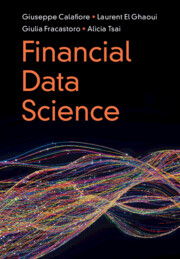
Confidently analyze, interpret and act on financial data with this practical introduction to the fundamentals of financial data science. Master the fundamentals with step-by-step introductions to core topics will equip you with a solid foundation for applying data science techniques to real-world complex financial problems. Extract meaningful insights as you learn how to use data to lead informed, data-driven decisions, with over 50 examples and case studies and hands-on Matlab and Python code. Explore cutting-edge techniques and tools in machine learning for financial data analysis, including deep learning and natural language processing. Accessible to readers without a specialized background in finance or machine learning, and including coverage of data representation and visualization, data models and estimation, principal component analysis, clustering methods, optimization tools, mean/variance portfolio optimization and financial networks, this is the ideal introduction for financial services professionals, and graduate students in finance and data science.
Confidently analyze, interpret and act on financial data with this practical introduction to the fundamentals of financial data science. Master the fundamentals with step-by-step introductions to core topics will equip you with a solid foundation for applying data science techniques to real-world complex financial problems. Extract meaningful insights as you learn how to use data to lead informed, data-driven decisions, with over 50 examples and case studies and hands-on Matlab and Python code. Explore cutting-edge techniques and tools in machine learning for financial data analysis, including deep learning and natural language processing. Accessible to readers without a specialized background in finance or machine learning, and including coverage of data representation and visualization, data models and estimation, principal component analysis, clustering methods, optimization tools, mean/variance portfolio optimization and financial networks, this is the ideal introduction for financial services professionals, and graduate students in finance and data science.
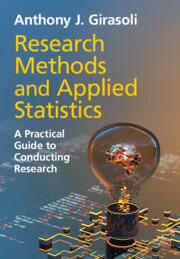
Students have an almost insurmountable task in understanding statistics in the psychological sciences and applying them to a research study. This textbook tackles this source of stress by guiding students through the research process, start to finish, from writing a proposal and performing the study, to analysing the results and creating a report and presentation. This truly practical textbook explains psychology research methods in a conversational style, with additional material of interest placed in focus boxes alongside, so that students don't lose their way through the steps. Every step is detailed visually with processes paralleled in both SPSS and R, allowing instructors and students to learn both statistical packages or to bridge from one to the other. Students perform hands-on statistical exercises using real data, and both qualitative and mixed-methods research are covered. They learn effective ways to present information visually, and about free tools to collect and analyse data.
Students have an almost insurmountable task in understanding statistics in the psychological sciences and applying them to a research study. This textbook tackles this source of stress by guiding students through the research process, start to finish, from writing a proposal and performing the study, to analysing the results and creating a report and presentation. This truly practical textbook explains psychology research methods in a conversational style, with additional material of interest placed in focus boxes alongside, so that students don't lose their way through the steps. Every step is detailed visually with processes paralleled in both SPSS and R, allowing instructors and students to learn both statistical packages or to bridge from one to the other. Students perform hands-on statistical exercises using real data, and both qualitative and mixed-methods research are covered. They learn effective ways to present information visually, and about free tools to collect and analyse data.