Internet Explorer 11 is being discontinued by Microsoft in August 2021.
If you have difficulties viewing the site on Internet Explorer 11 we
recommend using a different browser such as Microsoft Edge, Google
Chrome, Apple Safari or Mozilla Firefox.
Thoroughly updated, the 9th edition of this bestselling textbook incorporates global trends and data, supported by an exemplary case selection based on firms from around the world. The internationally cited author team of Czinkota, Ronkainen, and Gupta balance conceptual understanding of business theory with the day-to-day realities of business practice, preparing students to become successful participants in the global business place. This edition brings greater focus on Asia and emerging markets, as well as Brexit, the impact of COVID-19 on business and the importance of technology and the digital space to international business practice. Through its discussion and analysis, the book guides students to a greater understanding of contemporary business issues and helps them to develop new tools of analysis. Covering all key aspects of international business, the authors emphasize a few key dimensions: international context, role of government in international business, small- and medium-sized firms, and social responsibility.
Thoroughly updated, the 9th edition of this bestselling textbook incorporates global trends and data, supported by an exemplary case selection based on firms from around the world. The internationally cited author team of Czinkota, Ronkainen, and Gupta balance conceptual understanding of business theory with the day-to-day realities of business practice, preparing students to become successful participants in the global business place. This edition brings greater focus on Asia and emerging markets, as well as Brexit, the impact of COVID-19 on business and the importance of technology and the digital space to international business practice. Through its discussion and analysis, the book guides students to a greater understanding of contemporary business issues and helps them to develop new tools of analysis. Covering all key aspects of international business, the authors emphasize a few key dimensions: international context, role of government in international business, small- and medium-sized firms, and social responsibility.
Fully updated and revised, the tenth edition of this bestselling textbook introduces clinical psychology as a bridge between science and practice. Featuring over 1000 new references, the revised text includes additional coverage of digital mental health, diversity, and identity, and the practice of evidence-based clinical science. Coverage of such topics as emerging models for clinical training and accreditation, new approaches to diagnosing and classifying mental illness, and changes in healthcare legislation ensure that students will understand the very latest trends in the subject. The pedagogical focus of previous editions is maintained. 'Thinking Scientifically' sections in each chapter break down how to evaluate conflicting findings and use them to draw conclusions, while clinical vignettes bring concepts and theories to life. 'In Review' tables at the end of each major section prompt students to review material and test their comprehension. The text is accompanied by a full suite of online teaching supports.
Fully updated and revised, the tenth edition of this bestselling textbook introduces clinical psychology as a bridge between science and practice. Featuring over 1000 new references, the revised text includes additional coverage of digital mental health, diversity, and identity, and the practice of evidence-based clinical science. Coverage of such topics as emerging models for clinical training and accreditation, new approaches to diagnosing and classifying mental illness, and changes in healthcare legislation ensure that students will understand the very latest trends in the subject. The pedagogical focus of previous editions is maintained. 'Thinking Scientifically' sections in each chapter break down how to evaluate conflicting findings and use them to draw conclusions, while clinical vignettes bring concepts and theories to life. 'In Review' tables at the end of each major section prompt students to review material and test their comprehension. The text is accompanied by a full suite of online teaching supports.
Rigorously revised, the ninth edition of this successful, established textbook is ideal for current and future global leaders who want to lead international businesses sustainably and with impact. Combining a wealth of theoretical knowledge with real-world situations from diverse cultures, countries and industries, the book brings key concepts to life, while offering tools and strategies for putting them into practice. Reflecting global trends, this new edition features a greater focus on culture, virtual teams, leadership paradoxes, digital transformations, and a mindset-centered approach to dynamic change. All-new examples and cases contribute to bringing the book completely up to date, while reflection questions and a rich suite of online teaching resources (including suggested student exercises and classroom activities, teaching notes, further resources, and access to Aperian Globesmart), make this an essential tool for developing mindful, global leaders.
Rigorously revised, the ninth edition of this successful, established textbook is ideal for current and future global leaders who want to lead international businesses sustainably and with impact. Combining a wealth of theoretical knowledge with real-world situations from diverse cultures, countries and industries, the book brings key concepts to life, while offering tools and strategies for putting them into practice. Reflecting global trends, this new edition features a greater focus on culture, virtual teams, leadership paradoxes, digital transformations, and a mindset-centered approach to dynamic change. All-new examples and cases contribute to bringing the book completely up to date, while reflection questions and a rich suite of online teaching resources (including suggested student exercises and classroom activities, teaching notes, further resources, and access to Aperian Globesmart), make this an essential tool for developing mindful, global leaders.
Transnational Management provides an integrated conceptual framework to guide students and instructors through the challenges facing enterprises operating in today's complex worldwide environment. Through text narrative and cases, the authors skillfully examine the development of strategy, organizational capabilities and management roles, and responsibilities for managing effectively across national boundaries. The key concepts are developed in eight chapters supplemented by practical case studies from world-leading case writers. All chapters have been revised and updated for this ninth edition to reflect the latest thinking in transnational management while retaining the book's strong integrated conceptual framework. Nineteen new cases have been added and thirteen classics are retained. Recommended academic and practitioner readings have been updated for each chapter. A full range of online support materials include detailed case teaching notes, comprehensive lecture slides and a test bank. Suitable for MBA, executive education, and senior undergraduate students studying courses such as international management, international business or global strategy.
Transnational Management provides an integrated conceptual framework to guide students and instructors through the challenges facing enterprises operating in today's complex worldwide environment. Through text narrative and cases, the authors skillfully examine the development of strategy, organizational capabilities and management roles, and responsibilities for managing effectively across national boundaries. The key concepts are developed in eight chapters supplemented by practical case studies from world-leading case writers. All chapters have been revised and updated for this ninth edition to reflect the latest thinking in transnational management while retaining the book's strong integrated conceptual framework. Nineteen new cases have been added and thirteen classics are retained. Recommended academic and practitioner readings have been updated for each chapter. A full range of online support materials include detailed case teaching notes, comprehensive lecture slides and a test bank. Suitable for MBA, executive education, and senior undergraduate students studying courses such as international management, international business or global strategy.
International Law is the definitive and authoritative text on the subject. It has long been established as a leading authority in the field, offering an unbeatable combination of clarity of expression and academic rigour, ensuring understanding and analysis in an engaging and authoritative style. Explaining the leading rules, practice and caselaw, this treatise retains and develops the detailed referencing which encourages and assists the reader in further study. This new edition has been fully updated to reflect recent developments. In particular, it has expanded the treatment of space law and of international economic law, and introduced new sections on cyber operations and cyber warfare, as well as reflecting the Covid-19 crisis. Both clarifying fundamental principles and facilitating additional research, International Law is invaluable for students and for those occupied in private practice, governmental service and international organisations.
International Law is the definitive and authoritative text on the subject. It has long been established as a leading authority in the field, offering an unbeatable combination of clarity of expression and academic rigour, ensuring understanding and analysis in an engaging and authoritative style. Explaining the leading rules, practice and caselaw, this treatise retains and develops the detailed referencing which encourages and assists the reader in further study. This new edition has been fully updated to reflect recent developments. In particular, it has expanded the treatment of space law and of international economic law, and introduced new sections on cyber operations and cyber warfare, as well as reflecting the Covid-19 crisis. Both clarifying fundamental principles and facilitating additional research, International Law is invaluable for students and for those occupied in private practice, governmental service and international organisations.
This bestselling textbook provides an engaging and user-friendly introduction to the study of language. Assuming no prior knowledge of the subject, Yule presents information in bite-sized sections, clearly explaining the major concepts in linguistics and all the key elements of language. This eighth edition has been revised and updated throughout, with major changes in the chapters on Origins, Phonetics, Syntax, Semantics, Pragmatics, Discourse Analysis, First and Second Language Acquisition and Culture. There are forty new study questions and over sixty new and updated additions to the Further Readings. To increase student engagement and to foster problem-solving and critical thinking skills, the book includes over twenty new tasks. The online resources have been expanded to include test banks, an instructor manual, and a substantial Study Guide. This is the most fundamental and easy-to-use introduction to the study of language.
This bestselling textbook provides an engaging and user-friendly introduction to the study of language. Assuming no prior knowledge of the subject, Yule presents information in bite-sized sections, clearly explaining the major concepts in linguistics and all the key elements of language. This eighth edition has been revised and updated throughout, with major changes in the chapters on Origins, Phonetics, Syntax, Semantics, Pragmatics, Discourse Analysis, First and Second Language Acquisition and Culture. There are forty new study questions and over sixty new and updated additions to the Further Readings. To increase student engagement and to foster problem-solving and critical thinking skills, the book includes over twenty new tasks. The online resources have been expanded to include test banks, an instructor manual, and a substantial Study Guide. This is the most fundamental and easy-to-use introduction to the study of language.
Extensively updated throughout, this new edition introduces students to a wide range of modern legal issues. Written in a clear and engaging style, the book expertly addresses the ways in which the rules and structures of law respond to and influence changes in economic and political life. It provides a clear understanding of the relationship between law and society, with particular emphasis on the importance of morality, dispute solution and business regulation. An Introduction to Law is a valuable resource for students of law, be they undergraduate law students, those studying law as part of a mixed degree, or students on business or social science courses in which legal studies are included.
Extensively updated throughout, this new edition introduces students to a wide range of modern legal issues. Written in a clear and engaging style, the book expertly addresses the ways in which the rules and structures of law respond to and influence changes in economic and political life. It provides a clear understanding of the relationship between law and society, with particular emphasis on the importance of morality, dispute solution and business regulation. An Introduction to Law is a valuable resource for students of law, be they undergraduate law students, those studying law as part of a mixed degree, or students on business or social science courses in which legal studies are included.
Since publication of the seventh edition of this seminal text, personal injury law has witnessed momentous changes. A major overhaul of the social security system began in 2012 and the Equality Act 2010 significantly modifies anti-discrimination law and its impact on the disabled. But perhaps the most important legal developments have affected the financing and conduct of personal injury claiming and the operation of the claims-management industry. This new edition takes account of all this activity while setting it into a wider and longer perspective. Complaints that Britain is a 'compensation culture' and that the tort system is out of control are explained and assessed and options for further change are explored. Through the turmoil and controversy, the tort system remains a central feature of the legal and social landscape. The book's enduring central argument for its radical reform remains as compelling as ever.
Since publication of the seventh edition of this seminal text, personal injury law has witnessed momentous changes. A major overhaul of the social security system began in 2012 and the Equality Act 2010 significantly modifies anti-discrimination law and its impact on the disabled. But perhaps the most important legal developments have affected the financing and conduct of personal injury claiming and the operation of the claims-management industry. This new edition takes account of all this activity while setting it into a wider and longer perspective. Complaints that Britain is a 'compensation culture' and that the tort system is out of control are explained and assessed and options for further change are explored. Through the turmoil and controversy, the tort system remains a central feature of the legal and social landscape. The book's enduring central argument for its radical reform remains as compelling as ever.
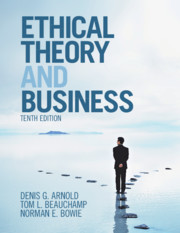
For forty years, successive editions of Ethical Theory and Business have helped to define the field of business ethics. The 10th edition reflects the current, multidisciplinary nature of the field by explicitly embracing a variety of perspectives on business ethics, including philosophy, management, and legal studies. Chapters integrate theoretical readings, case studies, and summaries of key legal cases to guide students to a rich understanding of business ethics, corporate responsibility, and sustainability. The 10th edition has been entirely updated, ensuring that students are exposed to key ethical questions in the current business environment. New chapters cover the ethics of IT, ethical markets, and ethical management and leadership. Coverage includes climate change, sustainability, international business ethics, sexual harassment, diversity, and LGBTQ discrimination. New case studies draw students directly into recent business ethics controversies, such as sexual harassment at Fox News, consumer fraud at Wells Fargo, and business practices at Uber.
For forty years, successive editions of Ethical Theory and Business have helped to define the field of business ethics. The 10th edition reflects the current, multidisciplinary nature of the field by explicitly embracing a variety of perspectives on business ethics, including philosophy, management, and legal studies. Chapters integrate theoretical readings, case studies, and summaries of key legal cases to guide students to a rich understanding of business ethics, corporate responsibility, and sustainability. The 10th edition has been entirely updated, ensuring that students are exposed to key ethical questions in the current business environment. New chapters cover the ethics of IT, ethical markets, and ethical management and leadership. Coverage includes climate change, sustainability, international business ethics, sexual harassment, diversity, and LGBTQ discrimination. New case studies draw students directly into recent business ethics controversies, such as sexual harassment at Fox News, consumer fraud at Wells Fargo, and business practices at Uber.
Bringing this best-selling textbook right up to date, the new edition uniquely integrates the theories and methods that drive the fields of biology, biotechnology and medicine, comprehensively covering both the techniques students will encounter in lab classes and those that underpin current key advances and discoveries. The contents have been updated to include both traditional and cutting-edge techniques most commonly used in current life science research. Emphasis is placed on understanding the theory behind the techniques, as well as analysis of the resulting data. New chapters cover proteomics, genomics, metabolomics, and bioinformatics, as well as data analysis and visualisation. Using accessible language to describe concepts and methods, and with a wealth of new in-text worked examples to challenge students' understanding, this textbook provides an essential guide to the key techniques used in current bioscience research.
Bringing this best-selling textbook right up to date, the new edition uniquely integrates the theories and methods that drive the fields of biology, biotechnology and medicine, comprehensively covering both the techniques students will encounter in lab classes and those that underpin current key advances and discoveries. The contents have been updated to include both traditional and cutting-edge techniques most commonly used in current life science research. Emphasis is placed on understanding the theory behind the techniques, as well as analysis of the resulting data. New chapters cover proteomics, genomics, metabolomics, and bioinformatics, as well as data analysis and visualisation. Using accessible language to describe concepts and methods, and with a wealth of new in-text worked examples to challenge students' understanding, this textbook provides an essential guide to the key techniques used in current bioscience research.
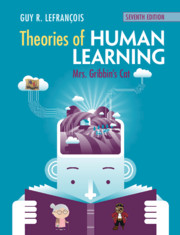
Both a serious academic text and an intriguing story, this seventh edition reflects a significant update in research, theory, and applications in all areas. It presents a comprehensive view of the historical development of learning theories from behaviorist through to cognitive models. The chapters also cover memory, motivation, social learning, machine learning, and artificial intelligence. The author's highly entertaining style clarifies concepts, emphasizes practical applications, and presents a thought-provoking, narrator-based commentary. The stage is given to Mrs Gribbin and her swashbuckling cat, who both lighten things up and supply much-needed detail. These two help to explore the importance of technology for simulating human cognitive processes and engage with current models of memory. They investigate developments in, and applications of, brain-based research and plunge into models in motivation theory, to name but a few of the adventures they embark upon in this textbook.
Both a serious academic text and an intriguing story, this seventh edition reflects a significant update in research, theory, and applications in all areas. It presents a comprehensive view of the historical development of learning theories from behaviorist through to cognitive models. The chapters also cover memory, motivation, social learning, machine learning, and artificial intelligence. The author's highly entertaining style clarifies concepts, emphasizes practical applications, and presents a thought-provoking, narrator-based commentary. The stage is given to Mrs Gribbin and her swashbuckling cat, who both lighten things up and supply much-needed detail. These two help to explore the importance of technology for simulating human cognitive processes and engage with current models of memory. They investigate developments in, and applications of, brain-based research and plunge into models in motivation theory, to name but a few of the adventures they embark upon in this textbook.
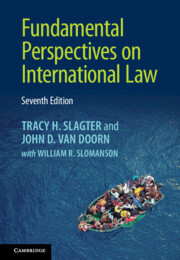
How does international law impact the behavior of states? This book designed for students in multiple disciplines offers a comprehensive, accessible introduction to the 'law of nations,' detailing the evolution of state practice in response to an ever-changing, diverse world. In this new edition of William Slomanson's foundational text, the new authors, Professors Slagter and Van Doorn, trace how states manage their sovereignty in myriad ways, working through treaties, international organizations, and international courts to secure their own as well as global interests. With special emphasis on five key areas-human rights, the use of force, human security and humanitarian intervention, environmental protection, and economic relations-the authors illustrate both the power and limits of international law to provide structure and predictability on a globalized planet. Real-world problem sets, annotated bibliographies, and a practical guide to studying international law make this a text that students and instructors alike will appreciate.
How does international law impact the behavior of states? This book designed for students in multiple disciplines offers a comprehensive, accessible introduction to the 'law of nations,' detailing the evolution of state practice in response to an ever-changing, diverse world. In this new edition of William Slomanson's foundational text, the new authors, Professors Slagter and Van Doorn, trace how states manage their sovereignty in myriad ways, working through treaties, international organizations, and international courts to secure their own as well as global interests. With special emphasis on five key areas-human rights, the use of force, human security and humanitarian intervention, environmental protection, and economic relations-the authors illustrate both the power and limits of international law to provide structure and predictability on a globalized planet. Real-world problem sets, annotated bibliographies, and a practical guide to studying international law make this a text that students and instructors alike will appreciate.
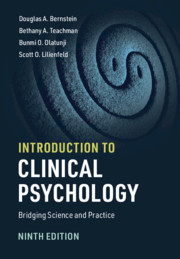
Thoroughly updated and revised, the ninth edition of this bestselling textbook introduces students to clinical psychology as a bridge between science and practice. Extensive revisions since the previous edition have resulted in the most accessible, up-to-date and thematically integrated edition of Introduction to Clinical Psychology yet, while maintaining the authority and accessibility students and instructors have come to rely on. Updates include: three new co-authors who are internationally recognized scholar-practitioners; illustrations of how psychologists use evidence-based practices to help clients; the fictional 'Jackson family' case studies, providing vivid examples of a family confronting numerous mental health challenges; 'Thinking Scientifically' sections in each chapter, which break down how students can think critically with conflicting findings and use them to draw conclusions; 'In Review' tables at the end of each major section prompting students to review the material and test their comprehension; and an expanded image program, printed in color for the first time.
Thoroughly updated and revised, the ninth edition of this bestselling textbook introduces students to clinical psychology as a bridge between science and practice. Extensive revisions since the previous edition have resulted in the most accessible, up-to-date and thematically integrated edition of Introduction to Clinical Psychology yet, while maintaining the authority and accessibility students and instructors have come to rely on. Updates include: three new co-authors who are internationally recognized scholar-practitioners; illustrations of how psychologists use evidence-based practices to help clients; the fictional 'Jackson family' case studies, providing vivid examples of a family confronting numerous mental health challenges; 'Thinking Scientifically' sections in each chapter, which break down how students can think critically with conflicting findings and use them to draw conclusions; 'In Review' tables at the end of each major section prompting students to review the material and test their comprehension; and an expanded image program, printed in color for the first time.
Retaining the broad yet practical approach of previous editions, this popular textbook has been fully updated with research and theory from the last two decades to guide students through the concepts and principles of group dynamics. It now includes a brand-new introductory chapter, three new chapters on diversity and inclusion, creativity and design, and virtual groups, and dedicated chapters on communication and perception. Each chapter features in-class 'Try this!' activities that promote understanding of practical applications, new case examples from real-world organizations, and enhanced learning objectives to guide readers' learning experience. Hundreds of new studies have been added throughout, and examples consider the effects of the COVID-19 pandemic, remote working, the MeToo movement, social media, climate change, and political polarization. Suitable for both undergraduates and first-year graduates, this textbook is supported by an online test bank, PowerPoint lecture slides, activity worksheets, and suggested additional resources.
Retaining the broad yet practical approach of previous editions, this popular textbook has been fully updated with research and theory from the last two decades to guide students through the concepts and principles of group dynamics. It now includes a brand-new introductory chapter, three new chapters on diversity and inclusion, creativity and design, and virtual groups, and dedicated chapters on communication and perception. Each chapter features in-class 'Try this!' activities that promote understanding of practical applications, new case examples from real-world organizations, and enhanced learning objectives to guide readers' learning experience. Hundreds of new studies have been added throughout, and examples consider the effects of the COVID-19 pandemic, remote working, the MeToo movement, social media, climate change, and political polarization. Suitable for both undergraduates and first-year graduates, this textbook is supported by an online test bank, PowerPoint lecture slides, activity worksheets, and suggested additional resources.
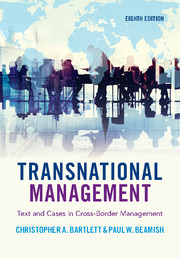
Transnational Management provides an integrated conceptual framework to guide students and instructors through the challenges facing today's multinational enterprises. Through text narrative and cases, the authors skilfully examine the development of strategy, organizational capabilities, and management roles and responsibilities for operating in the global economy. The key concepts are developed in eight chapters that are supplemented by carefully selected practical case studies from world-leading case writers. All chapters have been revised and updated for this eighth edition to reflect the latest thinking in transnational management while retaining the book's strong integrated conceptual framework. Ten new cases have been added, and four others updated. A full range of online support materials are available, including detailed case teaching notes, almost 200 PowerPoint slides, and a test bank. Suitable for MBA, executive education and senior undergraduate students studying international management, international business or global strategy courses, Transnational Management offers a uniquely global perspective on the subject.
Transnational Management provides an integrated conceptual framework to guide students and instructors through the challenges facing today's multinational enterprises. Through text narrative and cases, the authors skilfully examine the development of strategy, organizational capabilities, and management roles and responsibilities for operating in the global economy. The key concepts are developed in eight chapters that are supplemented by carefully selected practical case studies from world-leading case writers. All chapters have been revised and updated for this eighth edition to reflect the latest thinking in transnational management while retaining the book's strong integrated conceptual framework. Ten new cases have been added, and four others updated. A full range of online support materials are available, including detailed case teaching notes, almost 200 PowerPoint slides, and a test bank. Suitable for MBA, executive education and senior undergraduate students studying international management, international business or global strategy courses, Transnational Management offers a uniquely global perspective on the subject.
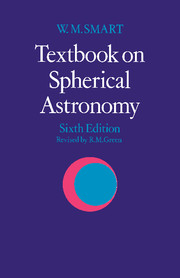
This well-established textbook gives a general but comprehensive introduction to positional astronomy. Originally based on the author's lecture courses at Cambridge University, it is intended primarily for undergraduates, but, due to its comprehensive nature, it is a very useful reference text for research workers in many branches of astronomy and space physics. The author considers the night sky as the celestial sphere and powerfully exploits the methods of spherical geometry. Most problems in which the precise determination of a heavenly body's position in the sky is important are considered in theoretical detail, and the necessary formulae are derived to a precision that is sufficient for all but the most specialist purposes. The present revision has ensured that the terminology and treatment correspond precisely to current astronomical practice. A guiding principle has been to re-establish compatibility with the Astronomical Ephemeris and, to a lesser extent, with the fuller explanations of the Explanatory Supplement to the Astronomical Ephemeris and the American Ephemeris and Nautical Almanac. Fairly frequent comments added to the text indicate the sometimes modified relevance of the subject matter to modern astronomy. A number of additional exercises help to illustrate the new material.
This well-established textbook gives a general but comprehensive introduction to positional astronomy. Originally based on the author's lecture courses at Cambridge University, it is intended primarily for undergraduates, but, due to its comprehensive nature, it is a very useful reference text for research workers in many branches of astronomy and space physics. The author considers the night sky as the celestial sphere and powerfully exploits the methods of spherical geometry. Most problems in which the precise determination of a heavenly body's position in the sky is important are considered in theoretical detail, and the necessary formulae are derived to a precision that is sufficient for all but the most specialist purposes. The present revision has ensured that the terminology and treatment correspond precisely to current astronomical practice. A guiding principle has been to re-establish compatibility with the Astronomical Ephemeris and, to a lesser extent, with the fuller explanations of the Explanatory Supplement to the Astronomical Ephemeris and the American Ephemeris and Nautical Almanac. Fairly frequent comments added to the text indicate the sometimes modified relevance of the subject matter to modern astronomy. A number of additional exercises help to illustrate the new material.
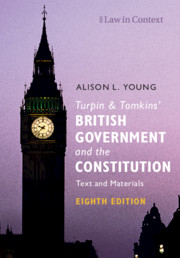
A lot has happened to the UK Constitution in the last seven years. We've witnessed the UK's exit from the EU, further devolution to Scotland and Wales, a number of prominent cases by the Supreme Court, two early parliamentary general elections, major governmental defeats and two Prime Ministerial resignations. Alison Young has built on the text of Colin Turpin and Adam Tomkins' earlier edition, keeping their unique historical and contextual approach, whilst bringing the material up to date with more contemporary examples, including references to Brexit, the recent prorogation and Brexit case law, and the Covid-19 pandemic. The book continues to include substantial extracts from parliamentary and other political sources as well as from legislation and case law. It also provides a full yet accessible account of the British constitution at the culmination of a series of dramatic events, on the threshold of possible further constitutional reform.
A lot has happened to the UK Constitution in the last seven years. We've witnessed the UK's exit from the EU, further devolution to Scotland and Wales, a number of prominent cases by the Supreme Court, two early parliamentary general elections, major governmental defeats and two Prime Ministerial resignations. Alison Young has built on the text of Colin Turpin and Adam Tomkins' earlier edition, keeping their unique historical and contextual approach, whilst bringing the material up to date with more contemporary examples, including references to Brexit, the recent prorogation and Brexit case law, and the Covid-19 pandemic. The book continues to include substantial extracts from parliamentary and other political sources as well as from legislation and case law. It also provides a full yet accessible account of the British constitution at the culmination of a series of dramatic events, on the threshold of possible further constitutional reform.
Revised and expanded to reflect cutting-edge innovation in aerodynamics, and packed with new features to support learning, the seventh edition of this classic textbook introduces the fundamentals of aerodynamics using clear explanations and real-world examples. Structured around clear learning objectives, this is the ideal textbook for undergraduate students in aerospace engineering, and for graduate students and professional engineers seeking a readable and accessible reference. Over 10 new Aerodynamics Computation boxes that bring students up to speed on modern computational approaches for performing aerodynamic analysis, including various Matlab® programs, OpenVSP, XFOIL, CBAero, Kestrel, and other analysis tools. New end-of-chapter team projects show students how to work together to solve larger, more important aerodynamic problems, in many cases using the computational approaches listed above. New and expanded coverage of propellers, UAVs, transonic wings, wingtip devices, drones, hypersonic aircraft, and aircraft design. New pedagogical features including Look Ahead navigation, expanded use of SI units in new homework problems, and many new Aerodynamics Concepts boxes featuring advanced experimental aircraft concepts. Additional references in each chapter that bring current advancements in aerodynamics into each part of the book.
Revised and expanded to reflect cutting-edge innovation in aerodynamics, and packed with new features to support learning, the seventh edition of this classic textbook introduces the fundamentals of aerodynamics using clear explanations and real-world examples. Structured around clear learning objectives, this is the ideal textbook for undergraduate students in aerospace engineering, and for graduate students and professional engineers seeking a readable and accessible reference. Over 10 new Aerodynamics Computation boxes that bring students up to speed on modern computational approaches for performing aerodynamic analysis, including various Matlab® programs, OpenVSP, XFOIL, CBAero, Kestrel, and other analysis tools. New end-of-chapter team projects show students how to work together to solve larger, more important aerodynamic problems, in many cases using the computational approaches listed above. New and expanded coverage of propellers, UAVs, transonic wings, wingtip devices, drones, hypersonic aircraft, and aircraft design. New pedagogical features including Look Ahead navigation, expanded use of SI units in new homework problems, and many new Aerodynamics Concepts boxes featuring advanced experimental aircraft concepts. Additional references in each chapter that bring current advancements in aerodynamics into each part of the book.
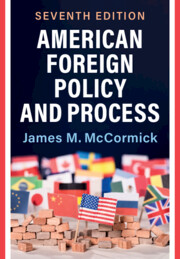
This comprehensive text provides a thorough analysis of the values and beliefs that have shaped American foreign policy, exploring how they have evolved over time. Through exploration of presidential administrations from the end of World War II to the present day, American Foreign Policy and Process provides an extensive comparison of policymaking processes during the Cold War, after Vietnam, and after 9/11. This new edition provides an up-to-date evaluation of the Trump and Biden administrations, including updates to reflect the current changes in the actions of important domestic foreign policy institutions. A series of chapters provides assessments of the role of governmental actors and non-governmental actors in affecting the direction of foreign policy. Through the use of supportive maps, key documents, figures, and tables, students will examine the history of American foreign policy and how it has evolved over time, with emphasis on comparing the changing approaches of administrations from Nixon through Biden.
This comprehensive text provides a thorough analysis of the values and beliefs that have shaped American foreign policy, exploring how they have evolved over time. Through exploration of presidential administrations from the end of World War II to the present day, American Foreign Policy and Process provides an extensive comparison of policymaking processes during the Cold War, after Vietnam, and after 9/11. This new edition provides an up-to-date evaluation of the Trump and Biden administrations, including updates to reflect the current changes in the actions of important domestic foreign policy institutions. A series of chapters provides assessments of the role of governmental actors and non-governmental actors in affecting the direction of foreign policy. Through the use of supportive maps, key documents, figures, and tables, students will examine the history of American foreign policy and how it has evolved over time, with emphasis on comparing the changing approaches of administrations from Nixon through Biden.